
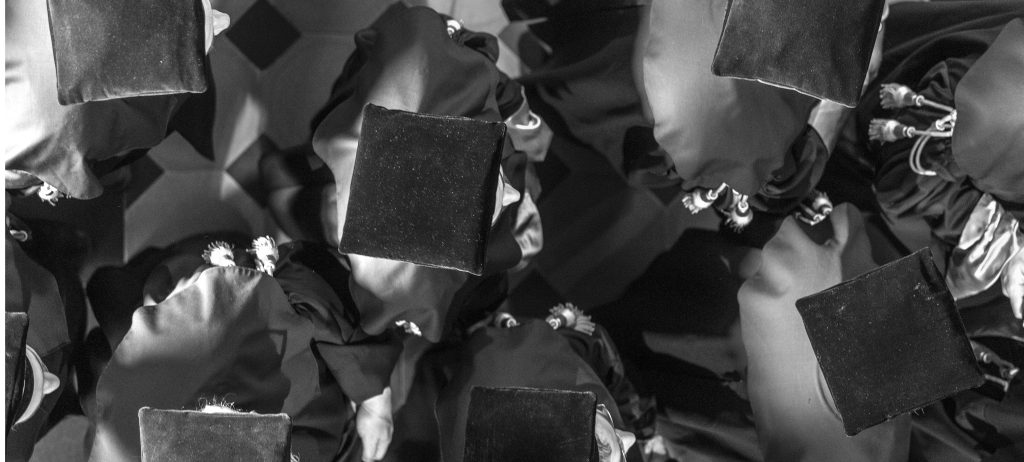
Venerdì 12 settembre gli studenti del Master in Food Culture and Communications – High Quality Products discutono le loro tesi e festeggiano la chiusura del loro ciclo di studi.
Sono 24 ragazzi e ragazze provenienti da diversi paesi: Italia, Australia, Austria, Canada, Danimarca, Giappone, Israele, Norvegia, Nuova Zelanda, Regno Unito, Stati Uniti, Svizzera.
Ecco gli studenti e le loro tesi:
- Luisa Albertin, dall’Italia, ha presentato la tesi dal titolo: “How to communicate the story of the Italian traditional food online Italy”.
- Susanne Arn, dalla Svizzera, ha presentato la tesi dal titolo “Good Food Finder: How to Assist the Quality Eater”.
- Olivia Bodzin, dagli Stati Uniti, ha presentato la tesi dal titolo “The Original Social Network – the Dining Table”.
- Chiara Bologna, dall’Italia, ha presentato la tesi dal titolo “The invisibility of slowness. An analysis of three different contexts as proponent for a revolutionary change in the parameters of High quality”.
- Antonia D’Argenio, dall’Italia, ha presentato la tesi dal titolo “Reflections On The Bill C 2236 Sani – Disciplina Organica della Coltivazione della Vite e della Produzione e del Commercio del Vino” – Testo Unico della Vite e del Vino”
- James Earle, dagli Stati Uniti, ha presentato la tesi dal titolo “Cheddar, a Democratic Food, and Advice on Affecting Positive Change in Food systems”.
- Fiona Faris, dalla Nuova Zelanda, ha presentato la tesi dal titolo: “If we fight with faith, we are twice armed – restoring the faith in artisanal food”
- Kenneth Bellaire Frausing, dalla Danimarca, ha presentato la tesi dal titolo: “Practical reflections on terroir”.
- Giulia Gallino, dall’Italia, ha presentato la tesi dal titolo “The concept of quality in artisanal chocolate production – The Guido Castagna’s Natural Method”.
- Judith Goldstein, da Israele, ha presentato la tesi dal titolo “The Experiential Economy and its impact on the food industry and influence on the public food behaviours”.
- David Gyllander, dalla Norvegia, ha presentato la tesi dal titolo “Business plan Bakkastova Kafe in Flåm Norway”
- Philipp William Holtmann, dalla Germania ha presentato la tesi dal titolo “Different approaches to produce high-quality meat – a regional comparison”.
- Atsushi Hoshino, dal Giappone ha presentato la tesi dal titolo “A study of the feed remediation function of the microorganism”.
- Jacqueline Samantha Kaplan, dagli Stati Uniti, ha presentato la tesi dal titolo “The Pursuit of Cured Meat: Can an Italian Tradition Achieve the American Dream?”.
- Valentina Manieri, dall’Italia, ha presentato la tesi dal titolo “Wheats and local biodiversity: a new language”.
- Nina Muth, dalla Germania ha presentato la tesi dal titolo “The homogenization of food – is it too late to save our taste buds?”.
- Rachel Mary Picco Duncan¸ da Italia e Regno Unito, ha presentato la tesi dal titolo “Can Teaching How To Cook “Good Food From Scratch” Make An Impact Not Just On Individuals But On The Food System In General?”
- Alice Pierdomenico, dall’Italia, ha presentato la tesi dal titolo “The new entry (just to say!) of the wine world: the horse traction. Just a trend or a conscious and motivated choice? The discussion is open”.
- Camilla Roberts dall’Australia, ha presentato la tesi dal titolo “Food Porn: An hour a day keeps the competitor away”.
- Ellen Shrybman, dal Canada ha presentato la tesi dal titolo “Local Food in North America and Europe A Comparative Look at the growth and obstacles faced”.
- Ronnie Tal da Israele, ha presentato la tesi dal titolo “BLOOD_101* 101 is a term indicating a standard or an introductory level of learning”.
- Wing Fong Wan, dall’Australia ha presentato la tesi dal titolo “Chef Cognition and Food Preparation & Creation: A 3-Michelin-Star Italian Chef and His Restaurant in Hong Kong”.
- Felix Andreas Watzka, dall’Austria ha presentato la tesi dal titolo “An analysis of important milestones through the history of Barolo and a critical outlook on future developments”
- Duan Tek Wong, dall’Australia ha presentato la tesi dal titolo “What’s Next For Barolo? The importance of the cru system in Barolo and its implications on the future of development and classification”.