

Elena Mancioppi former UNISG student of the graduate degree now PhD candidate in Ecogastronomy, Education and Society
Only a few days after UNISG Research day 2021, let’s hear Elena Mancioppi’s story, UNISG alumna of two-year graduate degree in Innovation and Management now PhD Candidate in Ecogastronomy, Education and Society
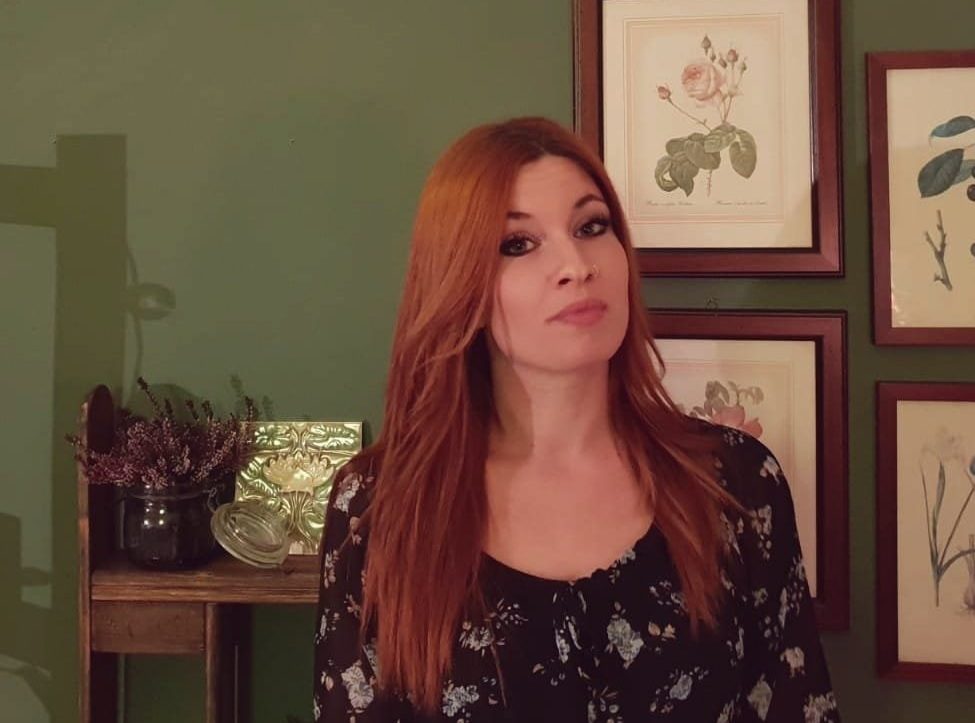
After a degree in Modern Literature, what brought you to Pollenzo for the Master’s Degree course?
On the sidelines of literary studies, already during my Bachelor’s Degree, I had begun to develop an interest in food as a subject of study. I started reading several books dedicated to the topic. In the beginning, from a primarily historical perspective, for example, through the works of Massimo Montanari, and then ranging from psychology to the anthropology of food. In my final thesis, I made these two themes cross paths; respecting the literary discipline, I used a “food lens”, writing about food as a symbol of identity in the works of Italo Calvino. Once I finished that first path, I decided to continue focusing, this time exclusively, on food and use my humanistic background as a ground on which to craft new knowledge. I did not know the University of Gastronomic Sciences but, talking to several people about my desire; I eventually came across those who knew it. So I enrolled in the two-year graduate Degree.
When did you understand that you wanted to undertake an academic path and why?
I never “understood” it, perhaps because I have always felt it or unconsciously wanted it. Mine was a very spontaneous and gradual path. I have always continued to do what I have always done and always liked to do, which is to study, but with growing commitment, involvement and awareness. It is true that, although without sudden epiphanies, I have let this happen. I think the reason is that the prospect of a life dedicated to research and study simply makes me happy. Doing research, as I have been able to fully experience in recent years while doing my doctorate, is a stimulating and profoundly creative activity. This is because the more you search, the more you find, however counterintuitive it may seem. It is a self-feeding circle. I realized that we do not start from a broad theme to get to the “core of the matter”, but rather from a topic, whatever it may be, which gradually expands and sometimes takes on unpredictable and unexpected paths. As Tim Ingold says, searching means re-searching, searching again; to touch the “same things” but with a gradually different look, always renewed by suggestions, intuitions, acquired knowledge, and refined sensitivities. Potentially, no research ever has an “end”; if by the end we mean an irrevocable conclusion, a goal reached once and for all. Therefore, I believe that an academic research path is a beautiful prospect.
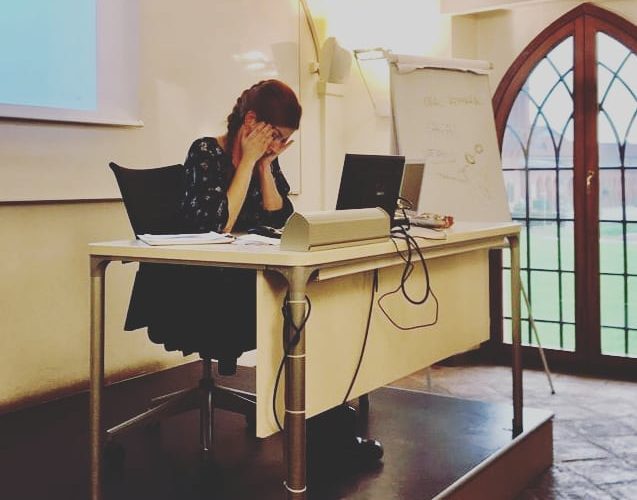
What is the most fascinating aspect about the project you will present at the Research Day?
The project consists of doctoral research, a path that has reached its third and final year, as I am in the drafting phase of my thesis. However, I think the aspect that fascinated me most is the subject itself, namely the sense of smell. Specifically for food, smell is one of the most involved and powerful senses, both in the actual ingestion and in the psychological dimension that concerns the memory and the whole affective sphere. But the sense of smell, for reasons inherent to the cultural structure typical of the West (think of the tenacious dualisms between mind/body, reason/passion), has also constituted one of the most ignored, underestimated or even stigmatized perceptive systems due to the close relationship that it entertains with the animality, the irrationality, the unspeakable, that peculiar “I don’t know what” that a smell condenses.
My research has taken a direction, which I think is very current, is that of “social aesthetics”, even in the political declination, of smells. We live in a world that many scholars define, on the one hand, “de-odorized”: due to the spread of a sanitizing hysteria that has taken hold in recent centuries; on the other hand, “hyper-aestheticized”: this has to do with market dynamics, with marketing, but also with a collective perception that tends to be saturated due to continuous sensorial bombardments. These are the strategies but also the perceptual traits of an era of consumption. Regarding the sense of smell, there is no place of consumption or sale (from supermarkets to telephone shops to clothing stores) or product class (from cosmetics to cars and, of course, food) that are not subjected to perfume. Here, however, the boundary between aestheticization and manipulation or adulteration is very blurred and subtle. The aromas often recall food, as they are powerful triggers of eminently emotional reactions; on the other hand, the smell of food has its roots in the depths of our being: it is the first stimulus that puts us in communication with the world, and not only as soon as we are born but also before, in intrauterine life. Reflecting on the value and use of the smell of food today, trying to grasp the aspects, the causes but also the symptoms, the possible consequences, the potential and the short circuits, I think it is an urgent operation, and even more so now, in this historical moment. If nothing else, the pandemic has helped to re-evaluate the importance of smell, which we so often take for granted. A world without smells, the one in which the anosmic subject (the one who loses or lacks olfactory sensitivity) lives, is a mute, dull world: it offers us no holds or comfort; it no longer speaks to us.
Looking at your path to date, what do you think were the most relevant moments, and how do you think your career will evolve?
The most relevant is certainly meeting Prof. Perullo during the Master’s Degree. Then, he was my teacher and thesis supervisor and, now, he is my PhD teacher and supervisor. I am very grateful to him for having made me grow a conscious passion for studying. His work, teaching, and guidance have been essential to my training and what I have done so far. He not only transmitted to me the passion for philosophy and, in particular, for aesthetics, but he also supported and encouraged me on a path that, especially at the beginning, can be intimidating. From here, other moments followed and, above all, projects and collaborations relevant to my career: a research grant (PRIN 2015) on political cuisine, after the Master’s Degree, in which I deepened and laid the foundations for what would later become my PhD project; then the publications of some articles, some translations and all the teaching in Pollenzo, with numerous lessons in different courses in which I was able to “ground” and share what I was exploring and investigating.
The natural evolution would be to continue this path and embark on a proper academic career. I hope, after my doctorate, to have the skills and opportunities to continue on this path.