Fat white globules tumble carelessly from her fingertips into the big blue bucket below as she methodically shovels the rebellious cheese clumps into small plastic molds using her bare, weathered hands. My eyes travel from cheese bucket to cheese mold and back again, dizzied by the rate at which she can pack a mold. In the time it takes me to wonder how long she has been dealing with these rambunctious curds (15 years is the answer), and when I will get to taste them (momentarily), she has loaded up five molds and shows no signs of slowing. I make a mental note to get cracking on perfecting a skill-set of my own as I come to the shocking realization that my main claim to fame, the ability to eat massive amounts of chocolate, probably won’t get me very far in life. As she tucks her rubbery baby curds into their new homes, words flow out of her mouth and she gestures wildly with her cheese-speckled hands, tiny cheese nuggets flying into the crowd of eager gastronomic students. If this cheese is the star of the show, she is the celebrity agent, gently coaxing this little known, yet strikingly pungent, bundle of acidic curds into the limelight. Her name is Agnes, her cheese is Graukäse, and her number one fan is me.
I met my cheese idol on a foggy afternoon in July, high up in the mountains of South Tyrol. Arriving at her farm straight from a 5 course cheese-filled lunch in the Aurina valley below, my fellow UNISG classmates and I rolled listlessly out of the bus, struggling all the while to awake our useless bodies from the food-induced coma that seems to accompany every school study trip. Stumbling into Mittermairhof dairy
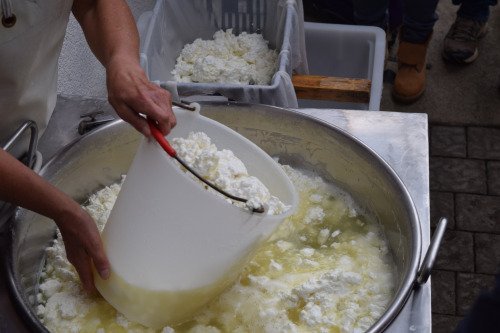
farm, already sweating over the thought of consuming more lactose, we were greeted by a bright-eyed middle-aged woman in a sturdy white apron hovering over a large bucket of curds and whey: Agnes. Her beaming face beckoned us closer and her energy bounced through the fog, pulling us out of our food comas and into her wild world of cheese. Before our arrival, she had removed the cream from the milk for use in butter, let it sit for two days to naturally coagulate, and then heated it to 48 C; a traditional method from back in the day when this cheese was made solely as a by-product from butter, an essential part of the peasant diet. As she strained the snowy white curds out of the steaming bucket of liquid whey, she began her story. I huddled close to the whey, hoping it would share some of it’s warmth with me, and silently berated myself for never learning German. How was I supposed to become this cheese goddess’s new best friend and devoted assistant if all I could say to her was “ Eins, zwei, drei. Ja genau.” or, in other words “One, two, three. Ya, exactly.” I was off the hook this time due to our trusty translator, but I secretly yearned to hear her original words as I feared the deepest, darkest, cheesiest tidbits would be lost in
translation.
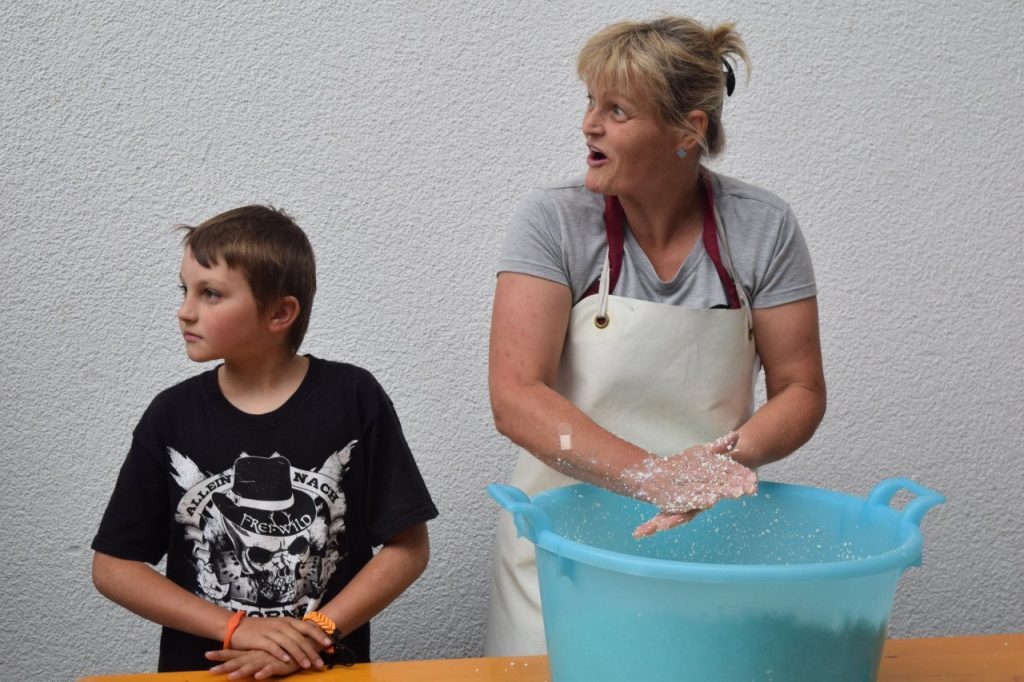
As we moved from the curd straining station over to the packing station, the story of Agnes and her Graukäse, aka Grey Cheese (an ode to the grey mold that blooms on it’s rind), unfolded, with all the elements of a classic love story: passion, frustration, and devotion. Agnes never planned to make cheese, but when she married her husband and suddenly found herself on his family farm high up in the South Tyrollean mountains, it seemed like the right move (Note to self: marry man with farm). In 2000 they built themselves a new barn, and with their precious three cows began to make cheese. It all sounded pretty idyllic, until she delved into the nitty gritty details. Waving a chunk of frozen cheese in the air for all her adoring fans to view, she swiftly grated a small piece of old cheese into the mountain of cheese curds, along with a slight dusting of salt and pepper, explaining her special technique of using the old culture to guide the new culture, like a little cheesy buddha. But this is not a foolproof technique, she warned, because Graukäse suffers from multiple personality disorder, due to natural acidification without use of rennet, resulting in a completely different cheese from one batch to the next. As a practiced cheese whisperer, Agnes has learned over time to channel her cheese in the direction she wants, but in the beginning she confessed to the sin of heartbreakingly throwing several batches away (gasp!). Now the routine is familiar, but still no walk in the park. With only three cows, and a completely machine free
operation, Agnes elicits the help of her equally energetic eight year old son and jolly husband to carry out the milking and cheese making to keep the operation running smoothly from June to September. As the only current Graukäse producer, Agnes feels it’s their family duty to uphold the tradition of this peasant cheese, which serves as a reminder of leaner times. When prompted as to what motivates her to continue this labor intensive process, she scrunched up her shoulders as the corners of her mouth shot upward into a big smile ,and exclaimed “I just love it”, releasing a contagious little laugh that rippled through the group.

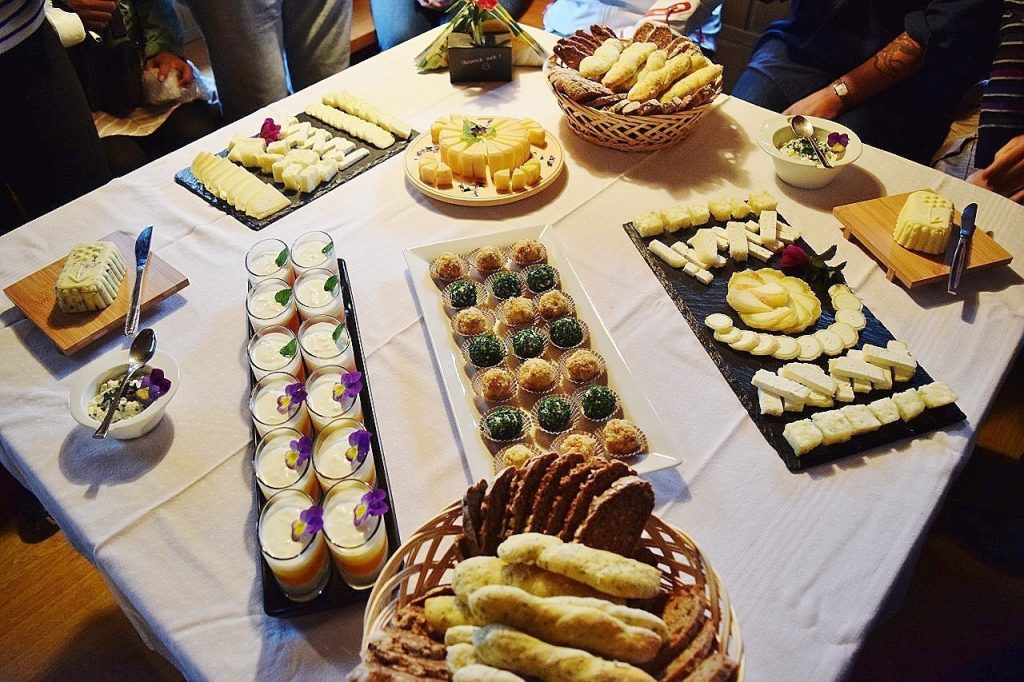
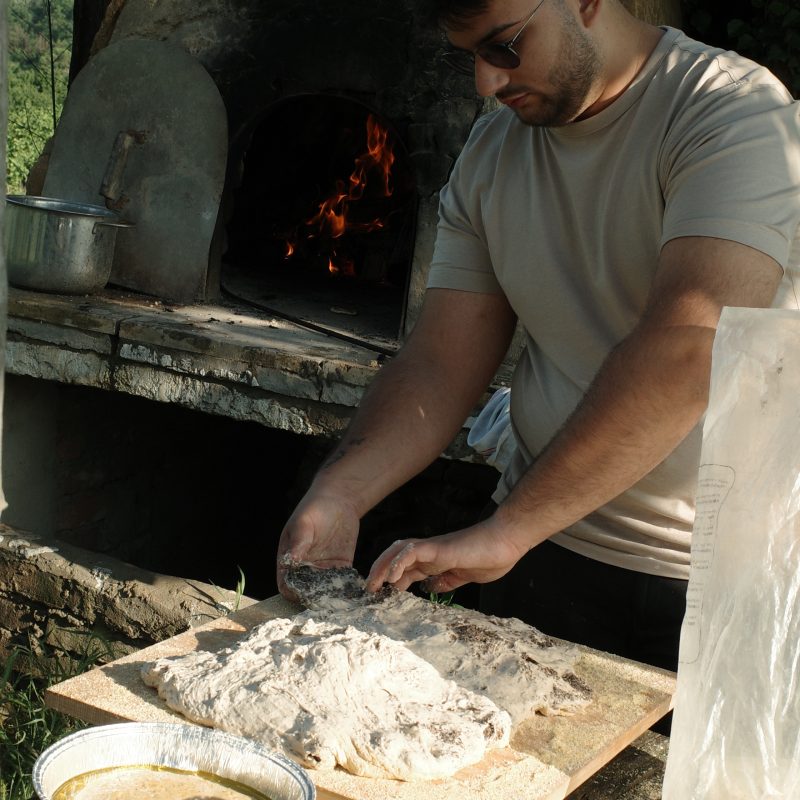
After watching and listening to Agnes as if she was the Dalai Lama, I broke out of my trance to pack my own mini cheese mold to take home. Arm deep in sticky curd bits, Agnes explained to us how to properly care for this traditional cheese by aging it in a moist, warm room and turning it daily for 1-2 weeks. Just as we thought the visit was over, she ushered us into her home where we were hit hard by a tangy acidic smell that could only mean one thing: a full-on dairy smorgasbord. I dove headfirst into a plate of whipped herb butter on homemade bread (straight from their enviable fiery wood oven) with three types of Graukäse cheese and a side of yogurt, squashing the voice within my stomach pleading with me to practice restraint as it looked for space to store more cheese products atop my burgeoning food baby. Yet, as
Agnes waxed poetic about her beloved Graukäse, I couldn’t help but shove the plastery white cheese, laced into a creamy yellow border, into my mouth admiringly. The cheese squeaked against my teeth as my sweet, salty, sour and bitter taste receptors leapt up to greet the stretchy crumbles, with the acidity and bitterness outstaying their welcome just a bit. Despite the slight battle with my tastebuds and the penetrating smell that lingered far too long on our hot bus, when Agnes mentioned the need for more Graukäse producers in the valley I had to resist the strong urge to run away and surrender my life to cheese. Her passion, and the rich history of this unique cheese, had me spellbound. I was the last to get on the bus that day, reluctant to leave Agnes, and, let’s be real, a table full of cheese. But I finally pulled myself away from my new cheese friend (just as it was starting to grow on me!), leaving my trust in the practiced hands of Agnes to keep this special Slow Food Presidia item just as funky and unique as it was 50 years ago.