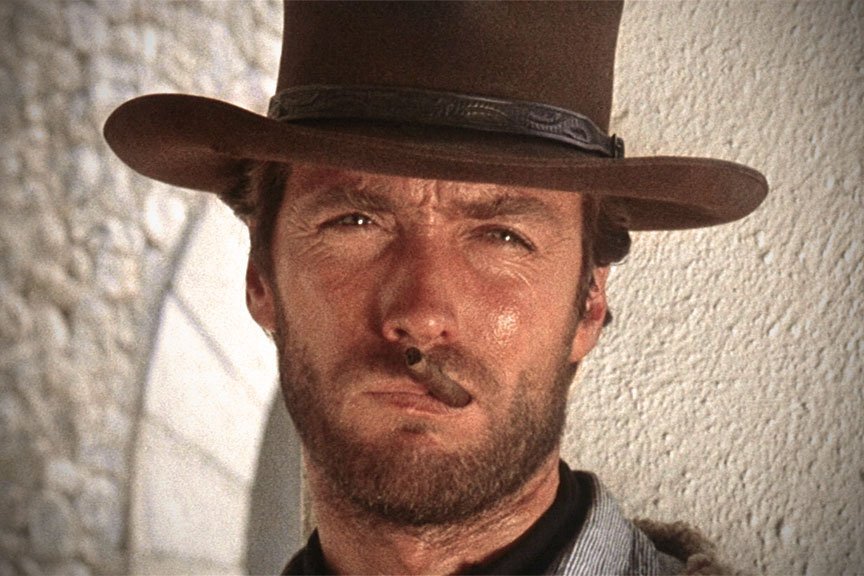
Above: Clint Eastwood in the starring role of Sergio Leone’s masterpiece “The Wine Blogger with No Name.”
Last week, I shared a note about a recent blog post by acclaimed British wine writer Jaime Goode, “Jamie Goode’s crucible: It’s tough to make wine writing pay.”
In his post, Goode wrote about the “ill-health of wine writing.”
“Several fellow writers,” he noted, “have [recently] lost their newspaper columns and regular gigs. It has been particularly tough for those who rely solely on writing for their living; for many like me who have had quite a good year, it has been the lecturing, judging, consulting, presenting and other communication-related activities that has made the difference.”
In my own post, I countered that in fact, it’s pretty tough to make a living by wine writing alone and that the model for success is exactly what he describes: An income made up of income streams from a wider variety of wine-related activities (“lecturing, judging, consulting, presenting and other communication-related”).
Even though the current generation of wine writers has lived through a brief boom in well-paying wine writing, the bottom line is that wine writing doesn’t pay.
(Native-English speakers will recognize the allusion to the adage crime doesn’t pay.)
In his post, Goode implies that there are too many wine writers out there who are “bad.”
He writes:
- The wine trade needs to consider who it wants to do the necessary communication about wine. At the moment, there remain some good wine writers without commercial conflicts of interest who talk about interesting wines and want to help the good guys to win.
- Increasingly, there is a blurring of boundaries, and the communicators who survive are part of media organizations who increasingly look to producers to make money; who promise content to producers who pay to play, albeit indirectly. Where content is directed towards regions and organizations who have budget. Who run events where both consumers and producers pay to participate.
- There are relatively few independent voices left. If those in the wine trade who have budget are smart, they will support the sort of people they’d like to do the communication. Traditionally, this has been the case. But if there’s an oversupply of good communicators then the temptation is to get people to work for free.
One of the next topics I’d like to tackle here on the UniSG New Gastronomes blog is the ethics of wine writing and what constitutes ethical content in wine writing and blogging.
On the one hand, wine writers are not lawyers or doctors or politicians who are dealing with business practices, health issues, or human rights. Wine writers write about wine. They don’t write about essential elements of modern life or human experience. They write mostly about luxury products that people can essentially live without.
On the other hand, consumers often put their faith in wine writer and wine writers. And they often base their purchases on what they have read in wine publications and on wine blogs.
What are the stakes of wine writing? What constitutes ethical wine writing? Morally sound wine writing?
We often reflect on comment on the aesthetic value of wine writing: Is wine writing good or bad?
Should we also be asking whether or not wine writing is good or evil? I think we should and although I disagree with Goode’s assessment that “good writers” can be judged by their will to write about “interesting wines” and help the “good guys win.”
One person’s meat is another person’s poison: Am I bad if I don’t like Goode’s “interesting wines” as much as he does? (In fact, I think he’s a great writer and generally agree with and love his recommendations.)
And who are the “good guys”? Is a winemaker who espouses racist ideology a “good guy” just because he makes good wine?
Over the next few weeks we’ll continue to parse Goode’s post. And in the process, I’ll offer a preview of topics we’ll be covering in this year’s “Wine Writing and Wine Blogging” seminar that I’ll be teaching as part of the Master’s in Italian Wine Culture program.
Stay tuned and thanks for being here…
Jeremy Parzen
Do Bianchi
Image via Wikipedia Creative Commons.