It’s a good thing that my mother doesn’t read my blog (or any of the blogs I contribute to) because she surely wouldn’t like what I am about to say.
My mother, now 83, grew up in the era of the great American gastronomic wasteland. A daughter of the midwest (South Bend, Indiana to be exact), she grew up eating only the occasional fresh vegetable. Nearly all the produce she did consume was either frozen or came from a can.
By the time I was eating solid food in the late 1960s (I was born in 1967), the standard lunch she served me (as I watched Bozo the Clown religiously each day) was Campbell’s tomato soup from concentrate in a can and a grilled cheese sandwich made with Wonder Bread (perhaps the most processed bread product ever conceived) and American cheese (for those of you who didn’t grow up in the U.S., American cheese is a processed cheese; in many cases, it is so processed that the producers can’t write the word “cheese” on the label).
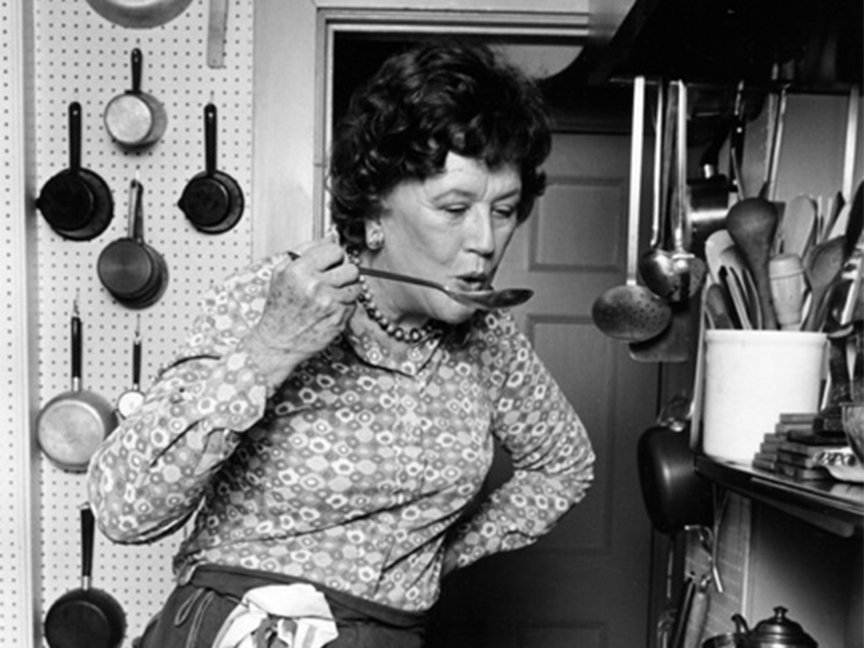
Then something wonderful happened: My mother — like many bourgeois Americans — discovered James Beard and then later Julia Child, the two great American food writers and cookery book authors of her early adulthood. Pioneers in the American gastronomic arts, they taught a generation of Americans how to cook without the crutch (and scourge) of processed foods. She became an ambitious home cook and entertaining became one of the most passionate expressions of her life and personality.
But she never, not even to this day, came to see food as a culturally or ideologically significant element of society. Food was and is a hedonistic and materialistic expression of society to her. And while it certainly has aesthetic, emotional, and nostalgic value in her mind, it will never be an expression of something she believes in.
My mom is a great cook and has prepared many memorable and delicious meals for my brothers and me over the years. And I’ve traveled with her in Italy and Mexico and have watched her swoon over panzanella and enchiladas suizas. I’m giving her a hard time here (partly because I know she doesn’t read my writing).
But the arc of her life (she was born in 1933) spans an epochal change in the gastronomic arts and sciences. As someone about to enter the sixth decade of his life, I find myself on the tail end of that shift. And I am convinced that my generation won’t see such a profound change in how we perceive and consume food.
I also believe that I am part of the first generation to embrace the cultural and ideological and political nature and significance of food and nutrition. The UniSG is a leader in shaping the next generation’s awareness of the gastronomic sciences and arts in an era when food and food culture matter more than ever. Western society is awakening to the intellectual and epistemological power of food. The master’s programs in wine and food culture at UniSG — I am certain — are among the greatest expressions of this movement. I highly and humbly recommend them to you.
Jeremy Parzen
DoBianchi.com
Image via Wikipedia Creative Commons.