Alice Waters: “You have been learning at a place that values the wisdom of farmers as deeply as the teachings of academics. You have engaged with books, but more importantly, you have put your hands in the earth”
UNISG Rector Andrea Pieroni: “Alice Waters’s food activism is civil courage”
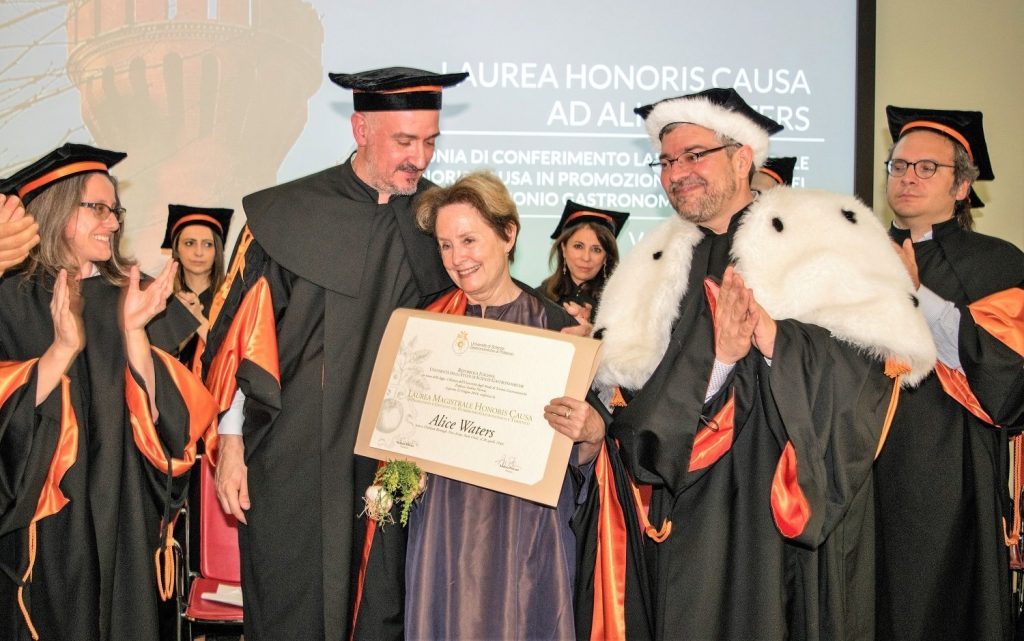
On Friday June 22, 2018, the University of Gastronomic Sciences granted an honorary postgraduate degree in Promotion and Management of Gastronomic and Tourism Heritage to Alice Waters, the American chef, restaurateur and activist, one of the most influential figures in global gastronomy and a pioneer in bringing food education into schools.
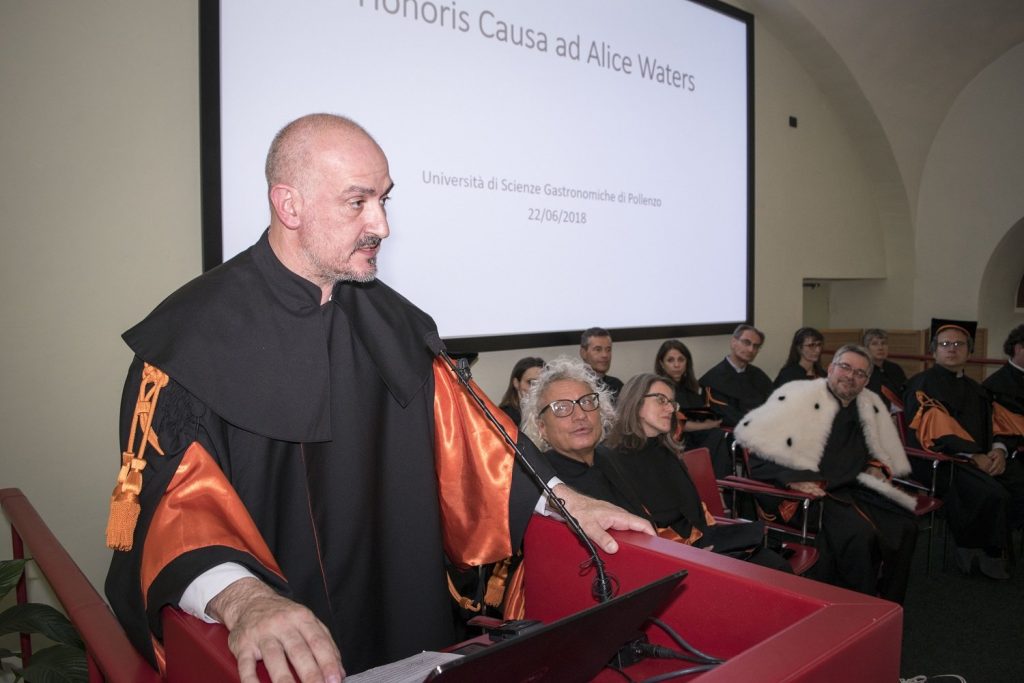
The university’s rector, Andrea Pieroni, opened the afternoon’s events, explaining: “The vision of our university has at its center the sovereignty and rights of communities to create their own food system. Here we are trying to articulate teaching, research and the third mission, not to study food as an end in itself, but to grasp its ability to transform what already exists and to realize full food sovereignty. There is something that cannot be avoided when trying to implement this vision, and that is altruism. UNISG is a place of exchange, research and spiritual vitality to improve the world that surrounds us. It is therefore necessary that the university works to make its actions concrete. So the university must take a proactive stance, generating a doing which is also an accomplishing, which renders gastronomy no longer an object or even a relationship, but a process in time. With a very few others, Alice has managed to change the foodscape of the American context. Her kind of food activism is also a form of civil courage, an expression little used in Italy. The term ‘courage civil’ was coined in France in 1935 and expanded its reach to German-speaking countries as ‘Zivilcourage.’ Food activism is being proactive about actions to change the food system. Gerd Meyer, the political scientist from Tübingen, defines ‘Zivilcourage’ as the socially responsible behavior that manifests itself when the fundamental values of a community are being violated. Zivilcourage is something that should be shown despite whatever advantages one might have, as individuals in a community that decides to protect the collective interest. Gerd Meyer divides civil courage into three forms: that of people, in other words self-defense; secondly not staying quietly and sitting still but acting; and thirdly taking a stand without ifs and buts, for common values. We too must not stay still! Thank you Alice Waters!”
The laudatio was given by Nicola Perullo, a professor of Esthetics at UNISG, who outlined important ethical and cultural references from Alice Waters’s work and mission.
“A garden is the place where we should celebrate Alice Waters. The garden is not just a place for esthetic contemplation. Alice Waters has taught us this. Nor is it a space entirely for resting. The garden is, literally, a school: In Greek, skolé was where one went to think freely and to share ideas with others—not a school for instruction, but a palestra or gymnasium of education. We are in the garden to educate ourselves and therefore also to educate. Education, unlike instruction, which follows the rules, is always in some way revolutionary, because the rules are made together by those who participate in it. So education is more plant-like, and the garden is the school, the gymnasium of education.”
He continued: “Alice Waters has worked on the good and the beautiful, on pleasure, on knowledge and on action starting from food. Chez Panisse, the restaurant she opened in 1971, has always been more than just a restaurant. It has been a life project—of an integral life, in the sense foretold by Goethe and Schiller: an esthetic life, cognitive, ethical and social. Chez Panisse was a community that, through food, by means of and thanks to food, encouraged an all-round human flowering. So, a universal and revolutionary idea: recovering the union of the beautiful and the good and making it flower in the garden.”
“Alice Waters is a great educator because she is a great communicator, and vice versa: In the garden, relationships are always two-way, reciprocal. But to communicate one can start from either the poetry of words or the poetry of action. Alice Waters started from action: not just cooking, but also cultivating. Cultivating a food garden is an esthetic practice because it allows us to educate ourselves to feel with the world; it allows us to mark the rhythm and to match our action to the rhythms and ways linked to the weather, to the seasons—it makes us feel connected, linked. Cultivating a vegetable plot and a garden is an ethical and esthetic action that is based on responsibility, which is the capacity to respond and correspond (responsible means, literally, to be able to respond).”
“Once again, all this leads us back to the garden. The garden, cultivated or uncultivated as it might be, is where one most obviously develops networks, horizontal relationships, the ‘green democracy’ of plants, as Stefano Mancuso calls it. We must take this paradigm seriously, make it our own, as a sustainable, and therefore happy, life project. A going towards and returning to a life that is all united, esthetic, cognitive, ethical and political. As Gaston Bachelard wrote, ‘The vegetal life, when it is inside of us, offers us the tranquility of the slow rhythm, its ample serene rhythm.’”
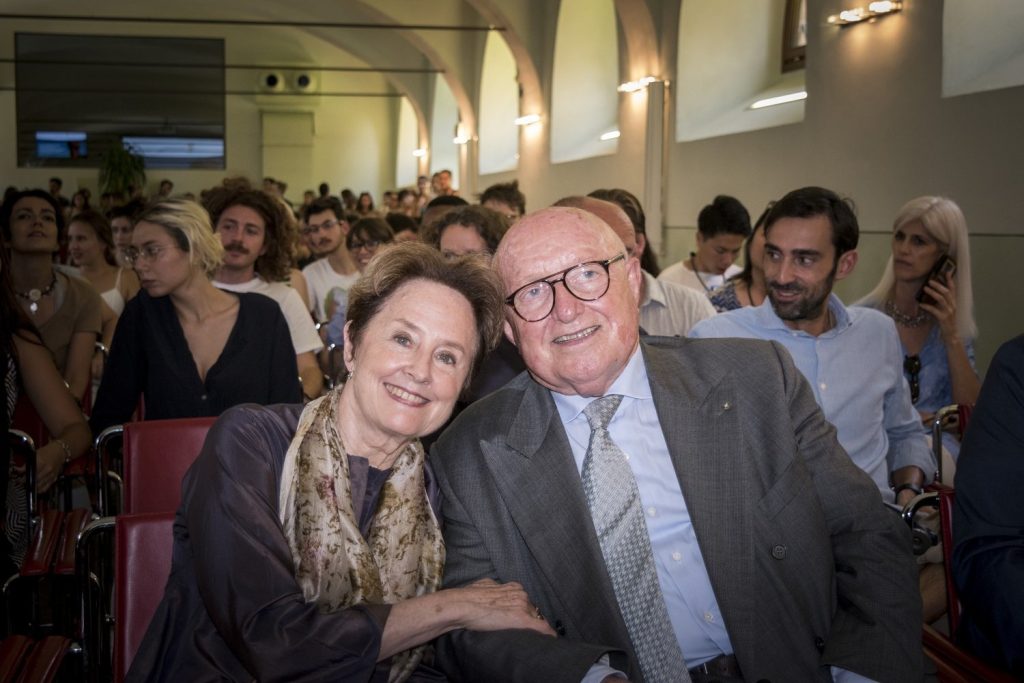
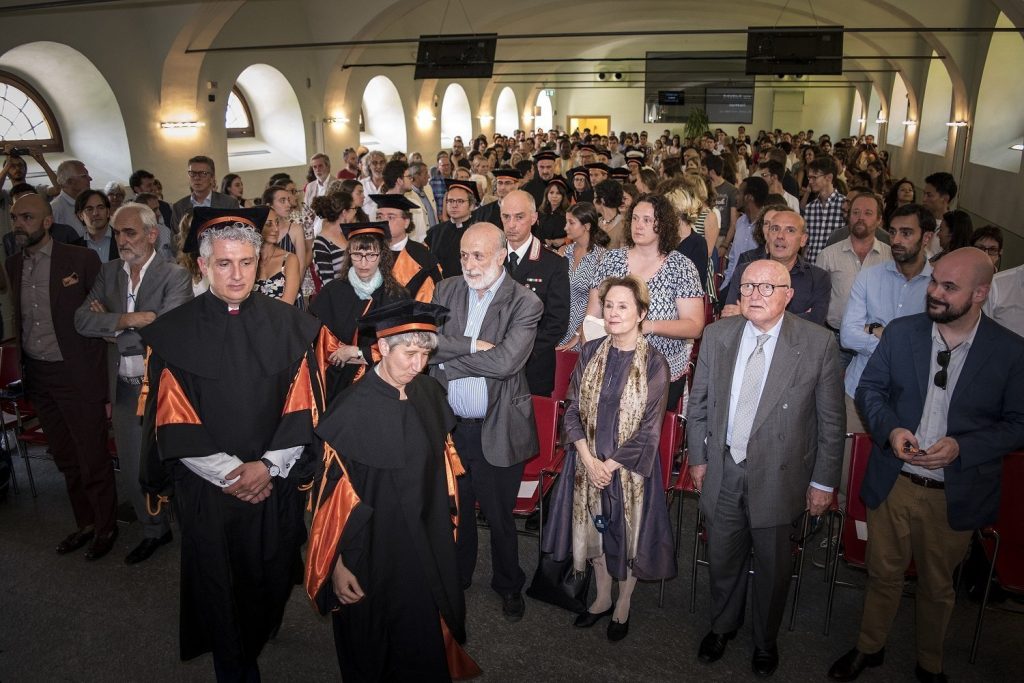
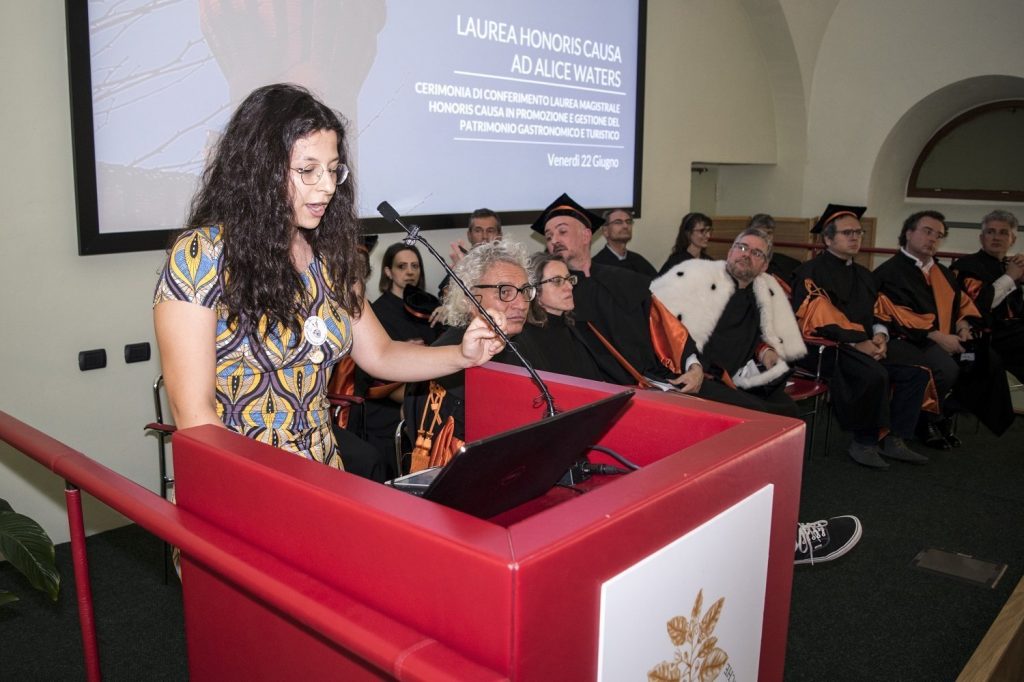
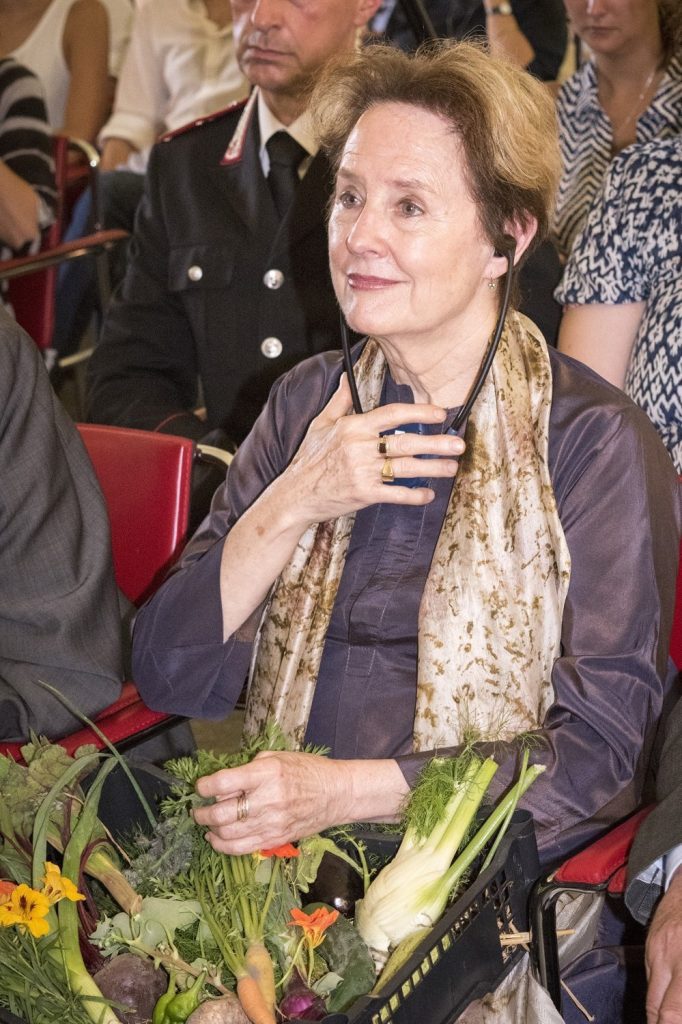
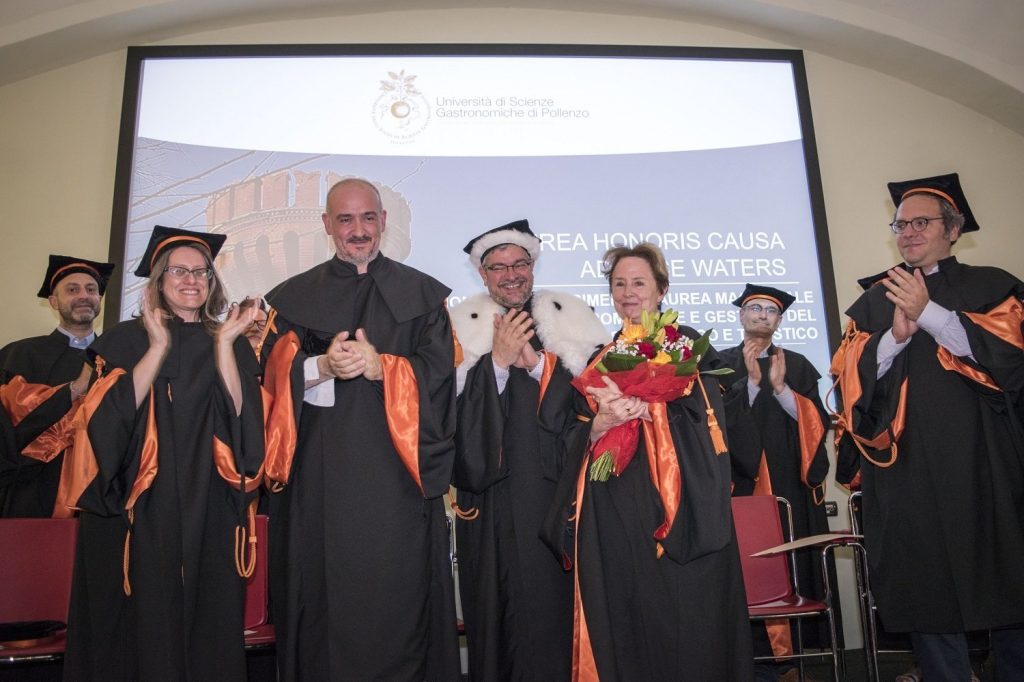
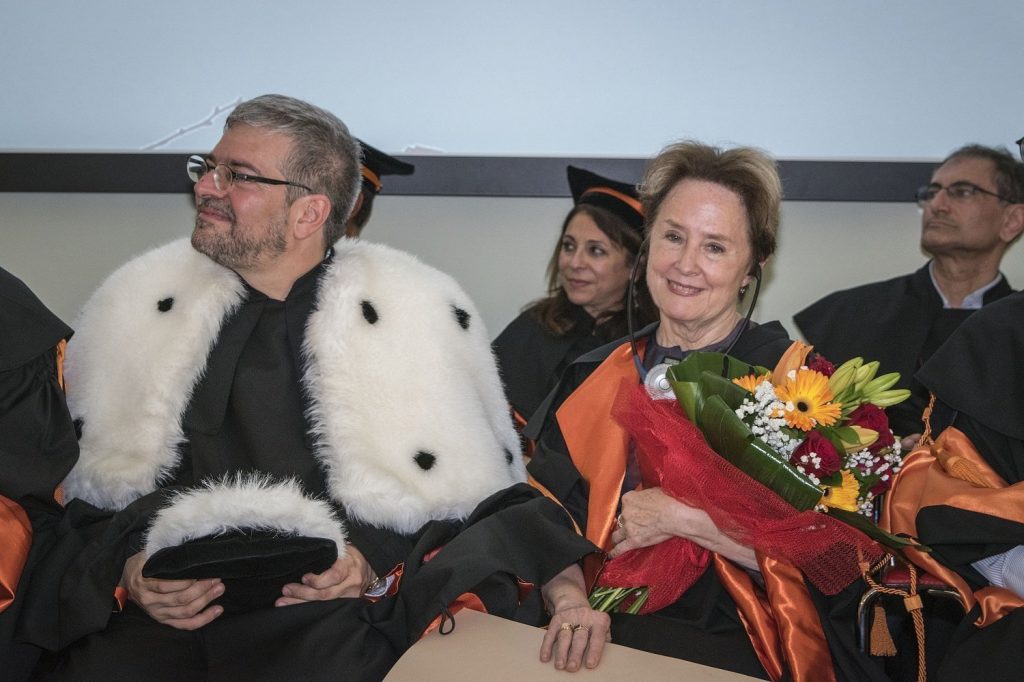
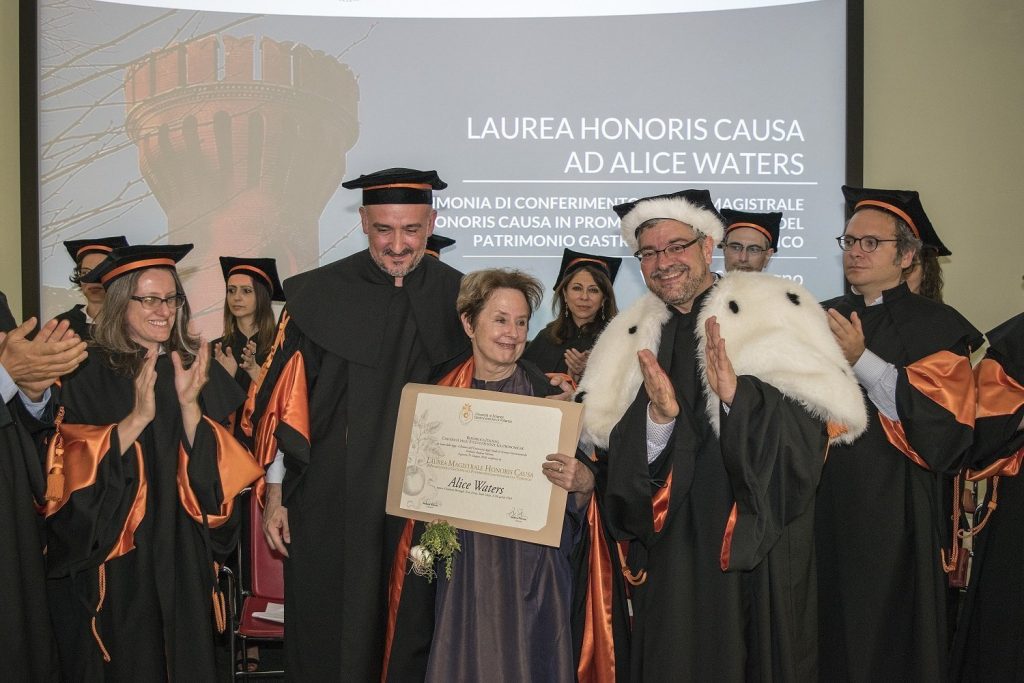
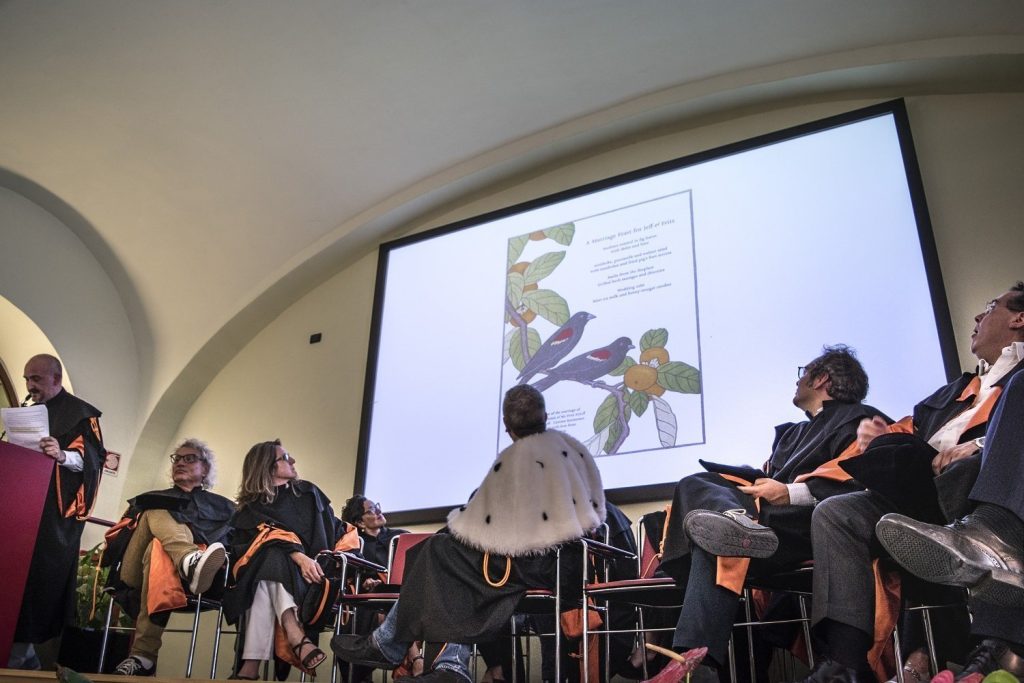
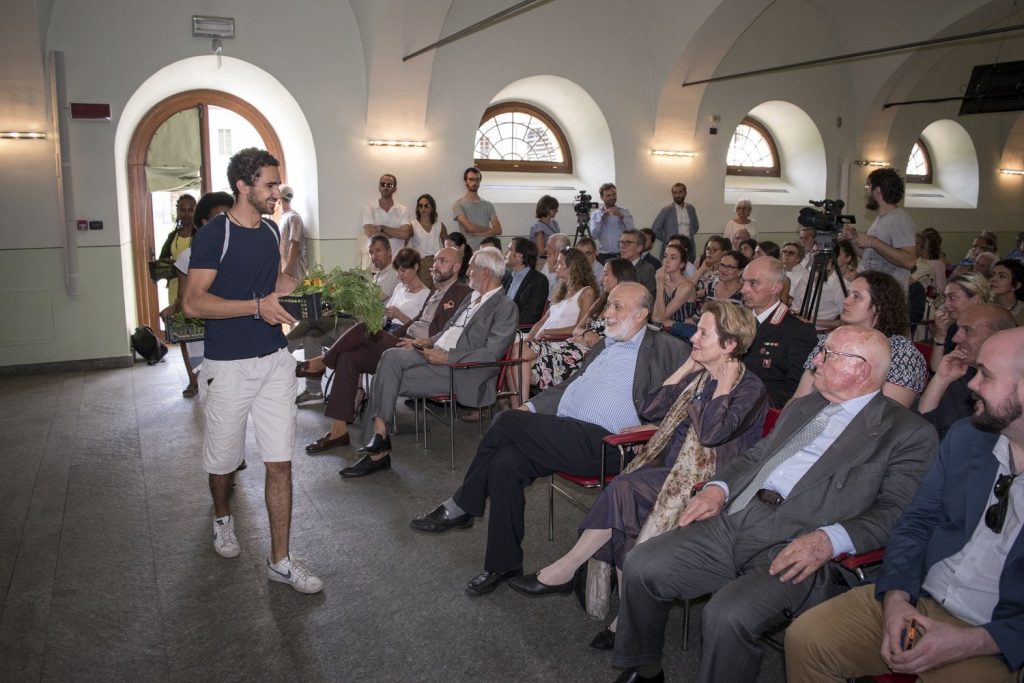
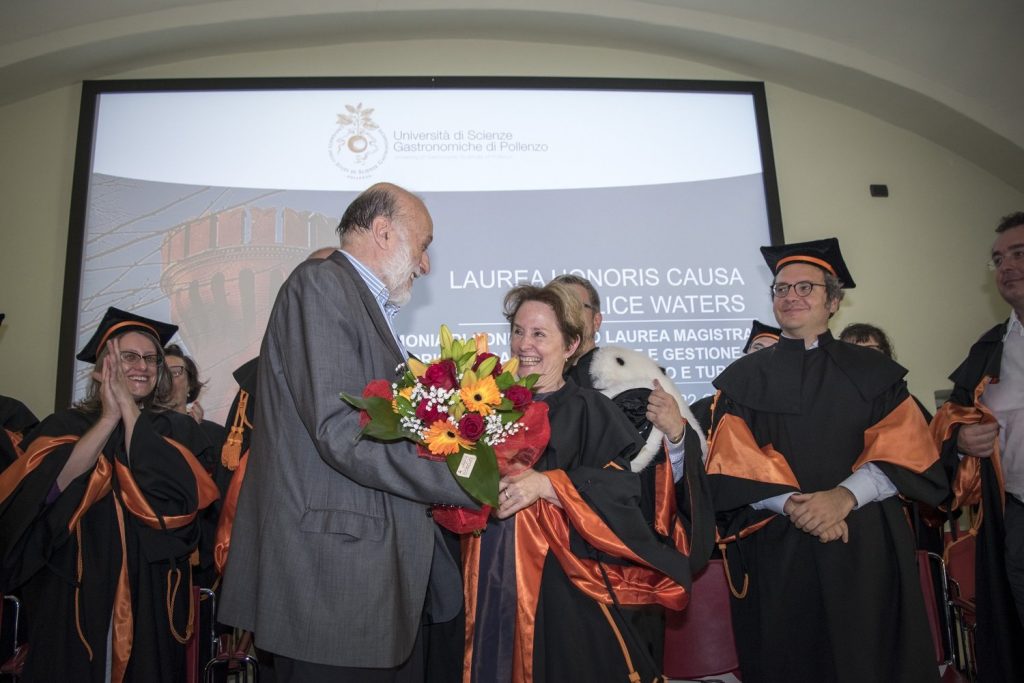
Her voice breaking with emotion, Alice Waters accepted her degree, apologizing for losing the thread of her speech and expressing her joy and surprise at feeling and seeing so much affection around her. “As you all know, the University of Gastronomic Sciences is a singular institution,” she said. “You will have an enormous advantage when you go out into the world, because you have been learning at a place that values the wisdom of farmers as deeply as the teachings of academics. You have engaged with books, but more importantly, you have put your hands in the earth.”
She added: “In public and private universities all over the United States, there are tremendous obstacles to making real food. Food that’s good, clean, and fair is not a part of daily student life, let alone an integral piece of a liberal arts education. Here, you have had the rare privilege of learning the power of food and all that surrounds it.”
“Let me give you an example of a graduate educated by Slow Food here in Italy who has gone on to have an outsize impact on the future of food in the United States: Sarah Weiner, an American from St. Louis, Missouri. I hired Sarah as my assistant, and two years later, she helped mastermind Slow Food Nation, in San Francisco, in 2008. After the success of Slow Food Nation, Sarah founded the Good Food Awards. Every year, the Good Food Awards hosts an annual competition and marketplace for food producers in the United States. Every year when I attend the awards ceremony, I am so moved by their dedication and passion, the way they are living the virtues of authenticity, community and connection.”
In conclusion, Alice Waters left the students with a message: “One of the founders of gastronomy, Auguste Escoffier, once said: ‘Good food is the foundation of genuine happiness.’ And as you have learned in your time here, it is also a solid foundation for meaningful lives and strong communities. Now it’s up to you to start laying the bricks. Just don’t forget to pause for lunch.”
The afternoon was brought to a close by Carlo Petrini, the president of the University of Gastronomic Sciences: “I met Alice 35 years ago and it was love at first sight. Those were completely different times to now, farmers’ markets were just starting to be talked about in the USA. I want to highlight about Alice that she knew how to appreciate the simple things in a culture like that of America. Know that this seemingly petite woman has an incredible strength and we are happy that she likes our small university and that it is has inspired emotions and affection in her. And today we can tell you that Alice Waters will come to teach at Pollenzo. Every year, Alice will be here for three days to dialog with students and put all of her work in relationship to the creativity of our students. Thank you to Alice for this emotion!”
Read the Lectio Magistralis, by Alice Waters >
Read the Laudatio, by Prof. Nicola Perullo >
Learn about our programmes…