Rector Andrea Pieroni: “Two new courses will start in September 2018, a three-year undergraduate degree in Gastronomic Sciences and Cultures and a postgraduate degree in Food Innovation & Management”
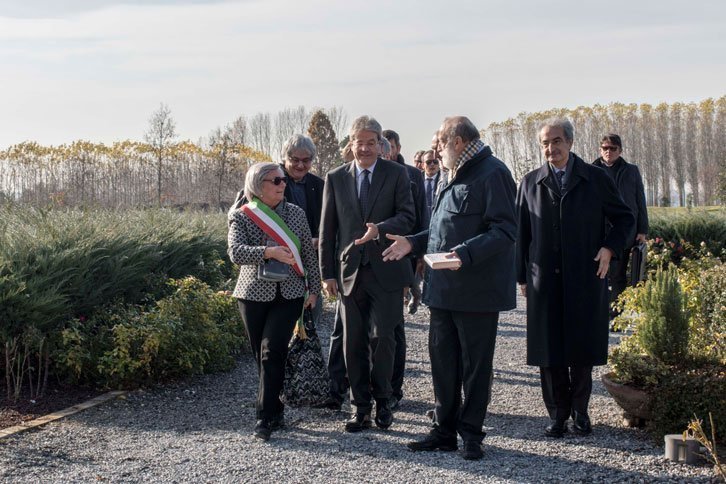
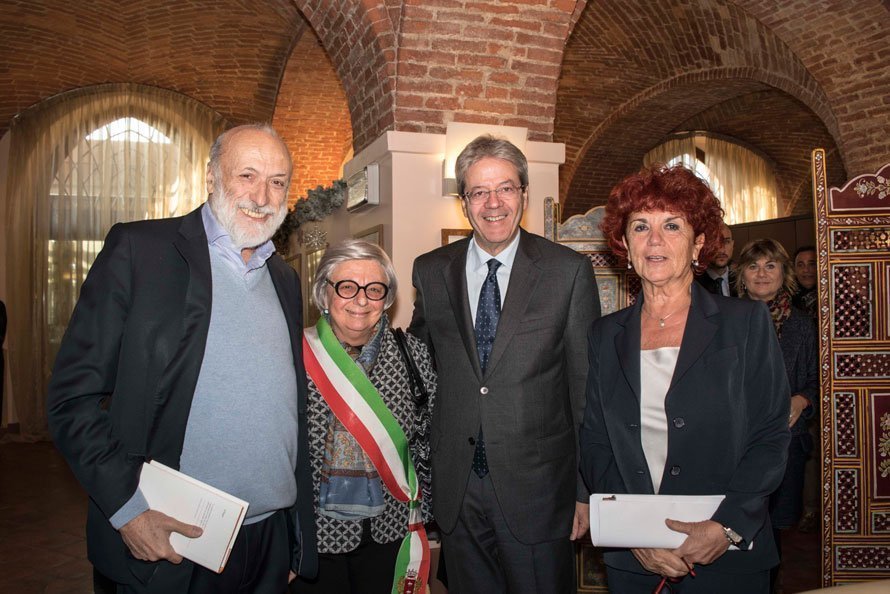
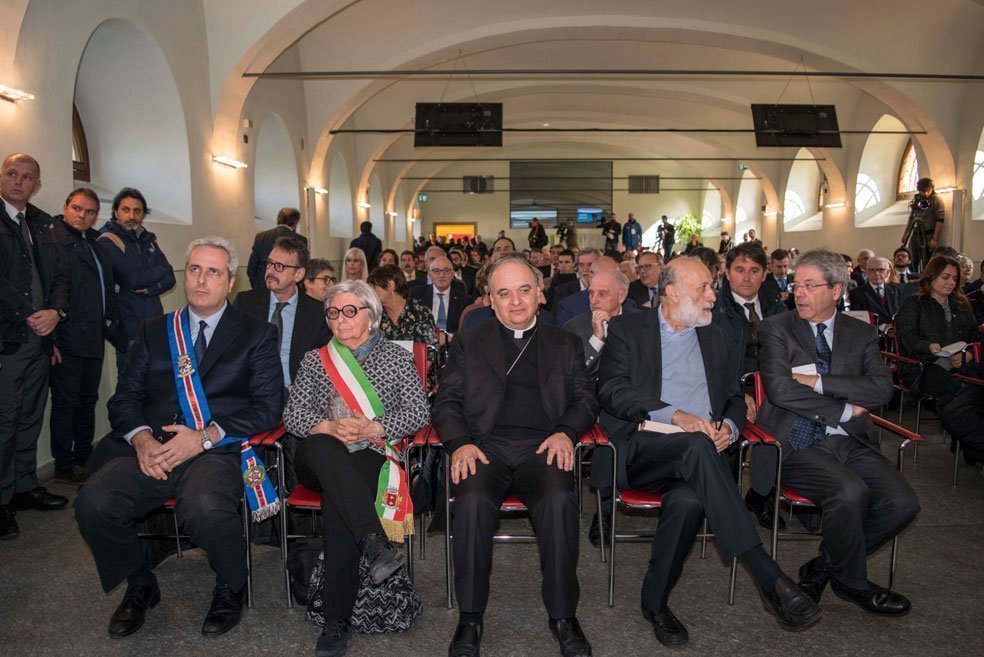
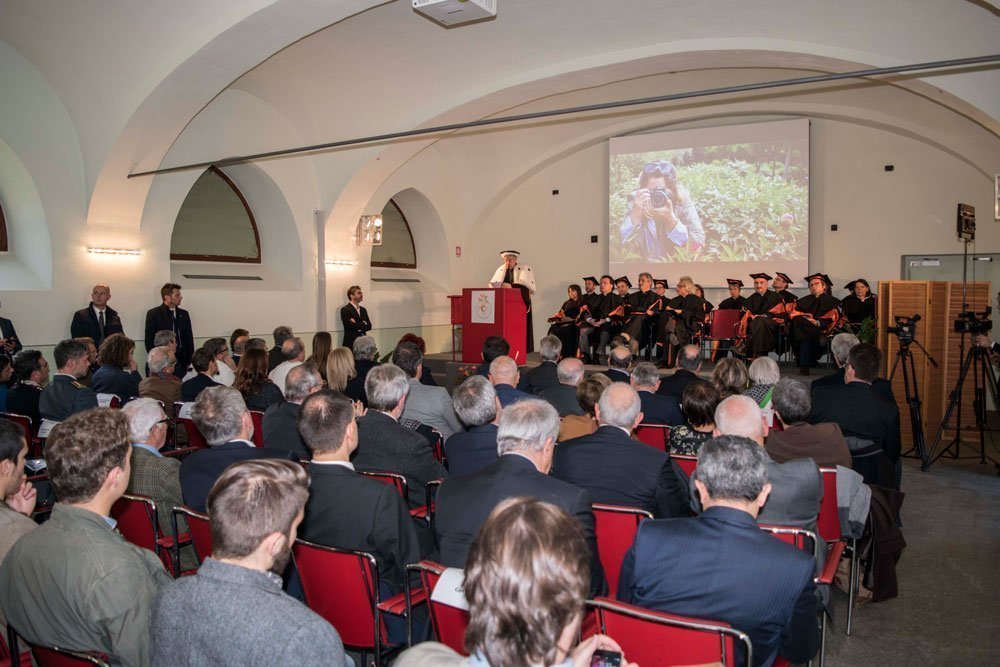
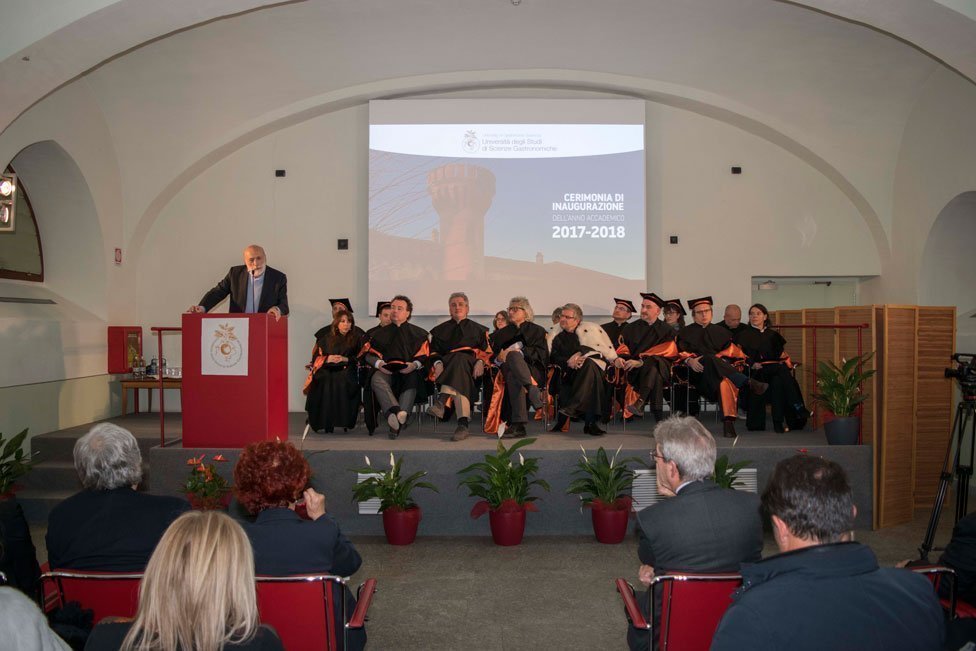
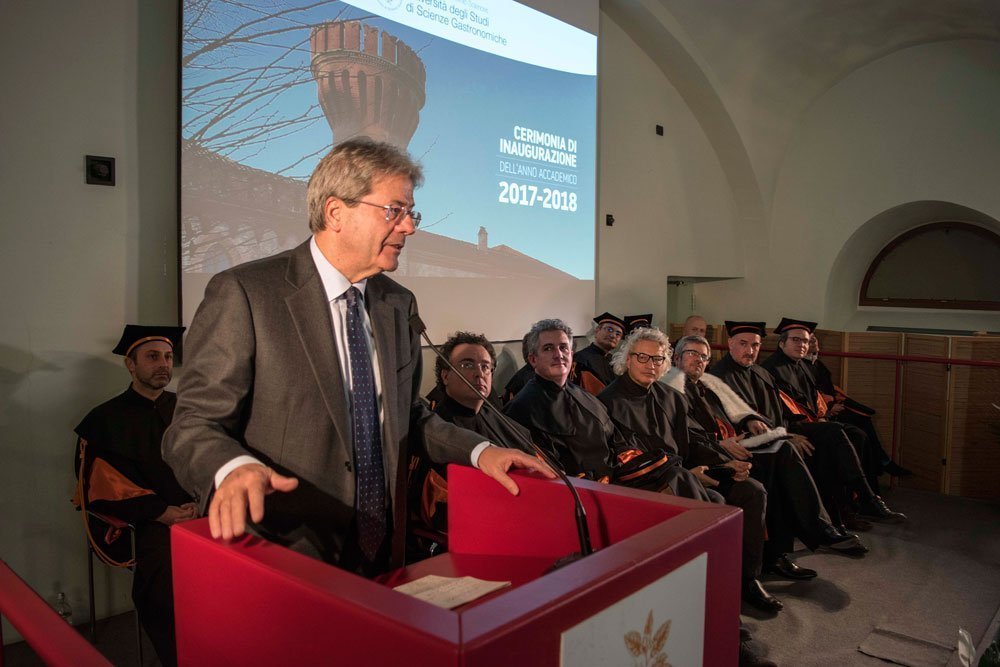
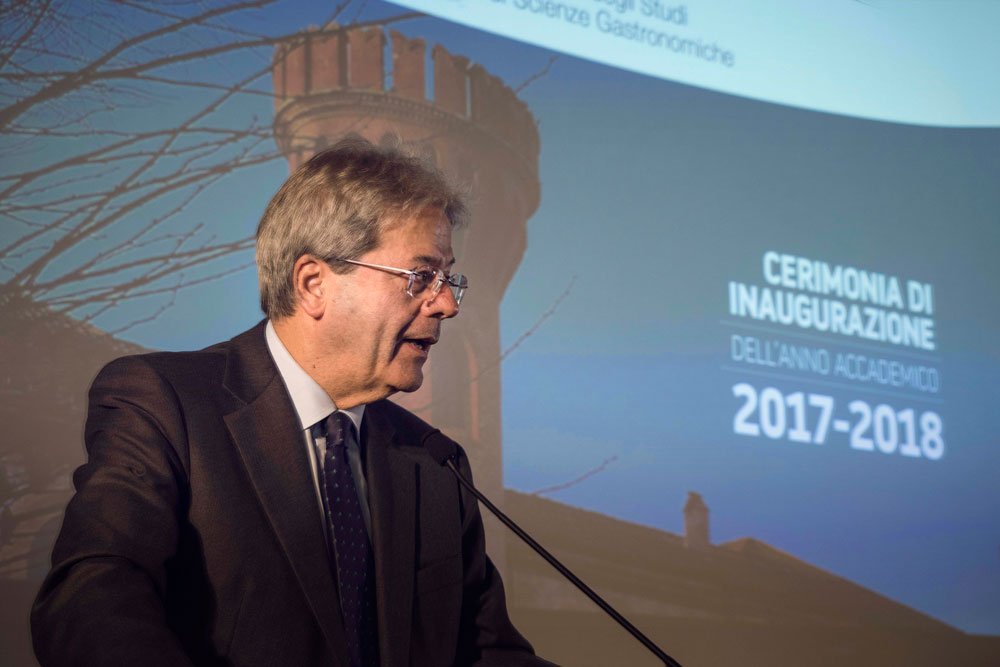
A destination, but also a starting point: That’s how Italian Prime Minister, Paolo Gentiloni, described the approval of two new officially recognized degree categories, developed thanks to the model of the University of Gastronomic Sciences of Pollenzo, as he spoke at the inauguration of the new academic year.
The three-year undergraduate degree category of Sciences, Cultures and Policies of Gastronomy and the postgraduate degree category of Economic and Social Sciences of Gastronomy confirm the immense contribution that the university is making to the academic recognition of the interdisciplinary nature of the gastronomic sciences. The parliamentary process, recalled the Prime Minister, was concluded thanks in part to the determination of the Education Minister, Valeria Fedeli, and marks an important milestone not just for UNISG but for the whole Italian academic system.
Gentiloni described this initiative as the result of an extraordinary coming together of agriculture, culture and tradition, which Pollenzo has been able to translate into university courses since 2004: a great achievement for Italy, which the university has been able to communicate around the world thanks also to Slow Food’s activities.
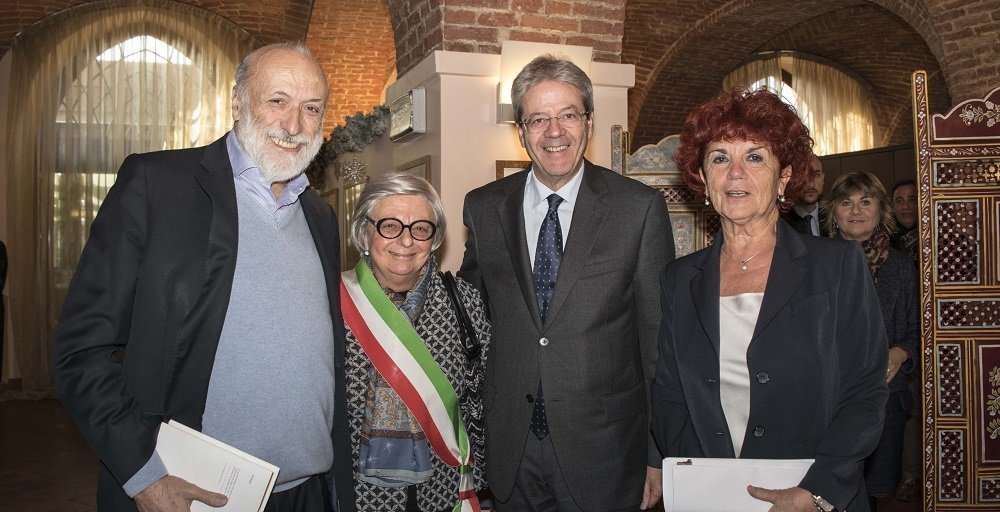
For her part, Italy’s Minister for Education, Universities and Research, Valeria Fedeli, defined the experience of UNISG as being important for the Italian academic system within Europe and a best practice of great interest. “The prestige and dynamism that, in just 13 years of life, the Pollenzo university has been able to acquire thanks to the determination and extraordinary skills of its leaders, are evident. This is undoubtedly thanks to the university and the exceptional people who have supported it with such conviction.”
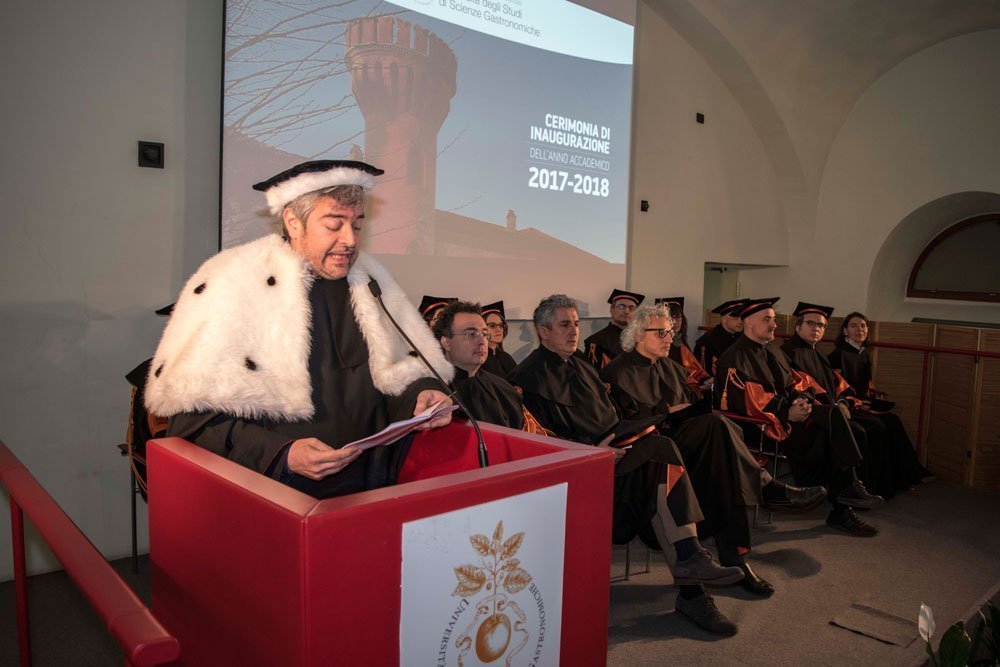
“The new degree categories that we have created will allow Pollenzo to establish two new courses that will start in 2018, a three-year undergraduate degree in Gastronomic Sciences and Cultures and a postgraduate degree in Food Innovation & Management,” announced the newly appointed rector of the university, Andrea Pieroni, who outlined the guiding principles of his term, summed up in the model of a university that will be “interdisciplinary, international, inspired, innovative, itinerant and interactive.”
These “six i’s” capture the experience of “a highly inclusive community, reflecting a spirit of sharing able to create an extraordinary network of international relationships that today bind Pollenzo to many external people and places: universities and research centers, institutions, food producers, artisans, chefs, food enterprises, local communities and indigenous peoples.”
The study trips and field research will become even more central within the architecture of the new degrees. “Through what I call ‘travel sciences,’ our university wants to provide students with the skills, tools and emotional intelligence to develop a profound ethical and ecological awareness, strengthening their sense of responsibility towards all of nature and society.”
Pieroni underlined how UNISG’s objective is not so much to train “the new managers of food, perhaps neutral and aseptic, but the protagonists of tomorrow’s gastronomy. Actors who seek to orient society towards quality food able to respect the environment and support social cohesion and the values of justice and solidarity. So social and political actors in an all-round way.”
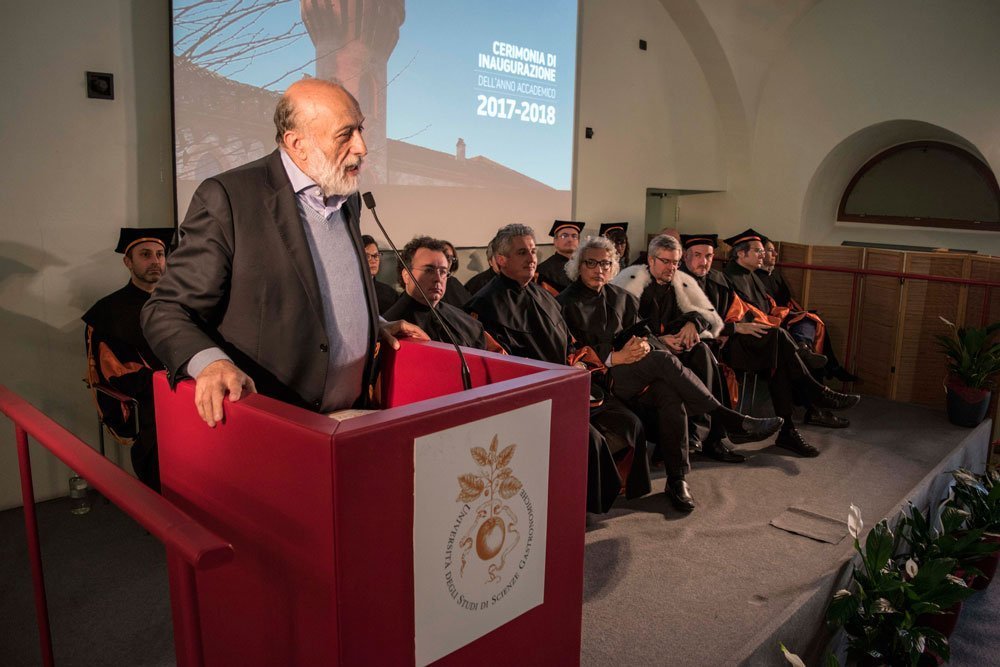
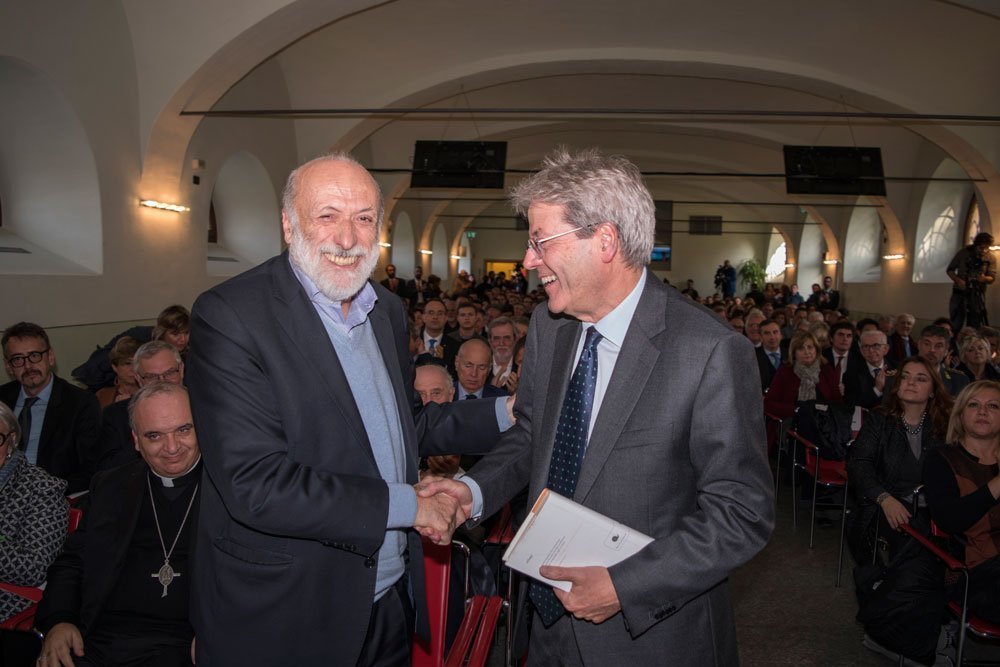
“Anyone who thinks that this place only educates professionals to work within the classic gastronomic system is thinking reductively,” confirmed the president of the University of Gastronomic Sciences, Carlo Petrini. “Our students and alumni are active subjects in business but also in civil society and local communities, in institutions like the FAO and IFAD, in projects like Slow Food’s Gardens in Africa.”
The most urgent task for the university and the whole educational system, said Petrini, is to construct a dialog between academic knowledge and traditional wisdom. “Terra Madre Salone del Gusto in Turin in September 2018 will be an opportunity to bring representatives from 1,000 universities together with the 7,000 farmers, fishers and food producers from the Terra Madre network of food communities. These communities protect a heritage of knowledge developed over the centuries and based on a vision of the world that is not focused solely on production, but is in harmony with nature and the community.”
Thanking the Prime Minister Paolo Gentiloni and the Education Minister Valeria Fedeli for having believed in the process that led to the official recognition of two new degree categories, Petrini said, “Today is a historic day for Pollenzo, which is realizing a goal that 13 years ago would have been impossible to imagine, and which is an achievement not just for our university. With the establishment of these degree categories we are gifting the entire Italian and international academy a model, an authentic way, of understanding the gastronomic sciences.”
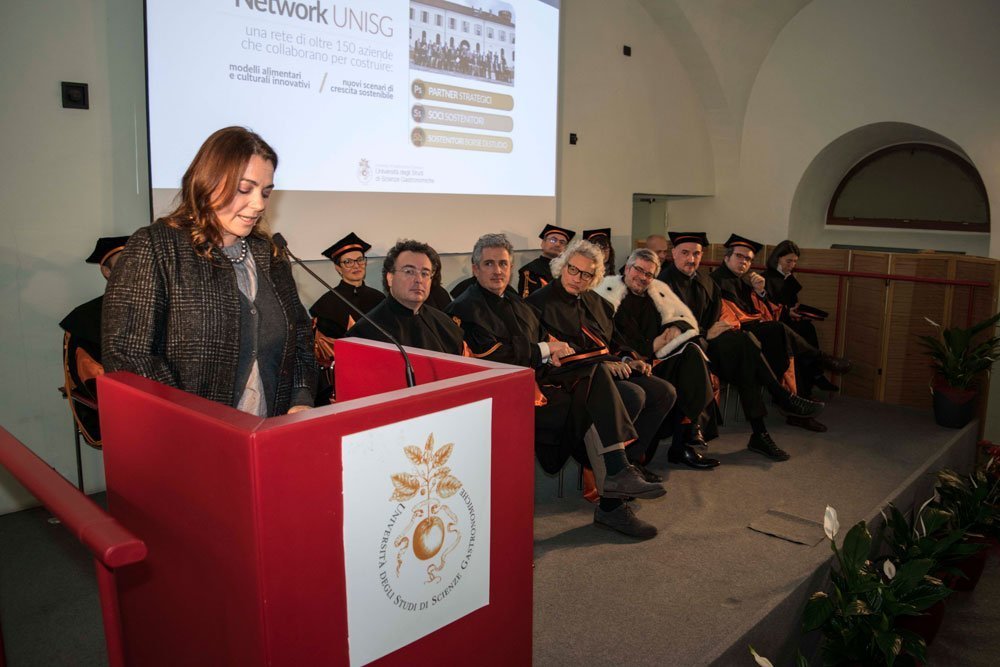
Speaking for the network of UNISG Contributing Members and Strategic Partners, Francesca Lavazza noted that Pollenzo had become a place of excellence, characterized by a multidisciplinary education. “We believe that it is important to work with young people, who are a source of energy and talent,” she said.
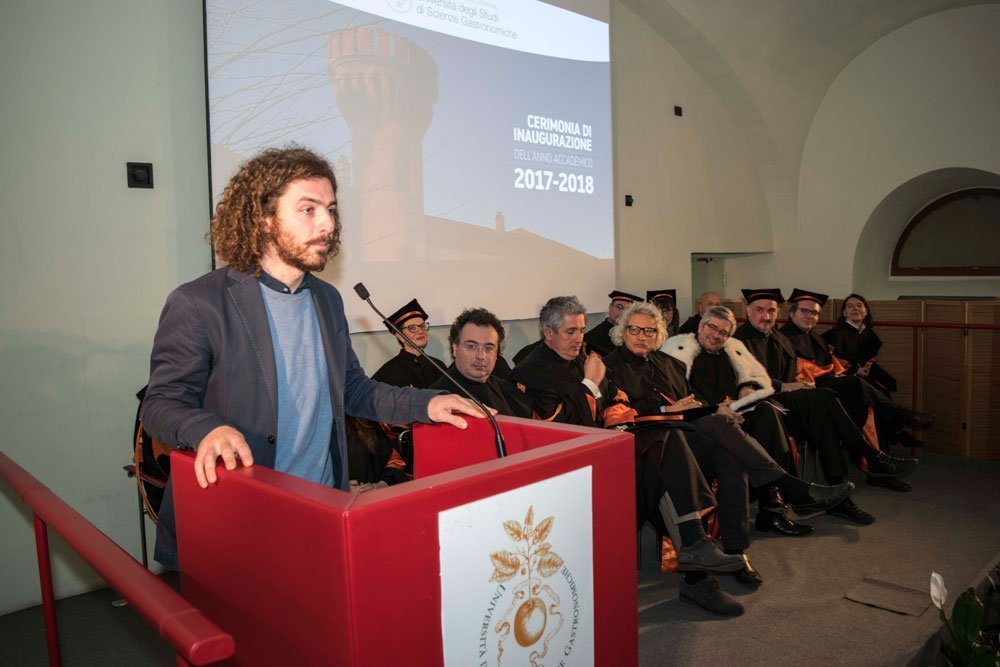
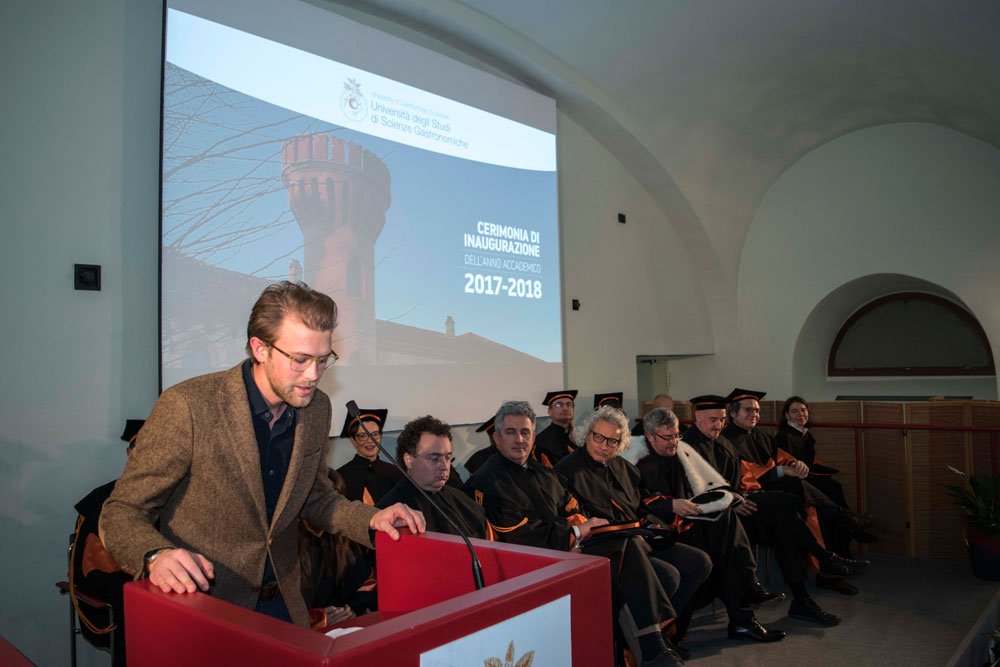
Testifying to an active role that extends well beyond the classroom, two young students from the university, Philip Linander from Sweden and Davide Fede from Italy, presented the Prime Minister with an open letter in favor of “Ius Soli,” the proposed law that would make it easier for foreigners to obtain Italian citizenship, in the name of the Pollenzo academic community. “Recognizing the citizenship of people who have lived in Italy long enough to complete a program of studies does not seem to us a gracious concession, but a key able to switch on the motor of the future of a country much of whose history has been based on the convergence of cultures and the thousand differences of traditions that have met here over thousands of years.
Download the open letter in favor of Ius Soli >