
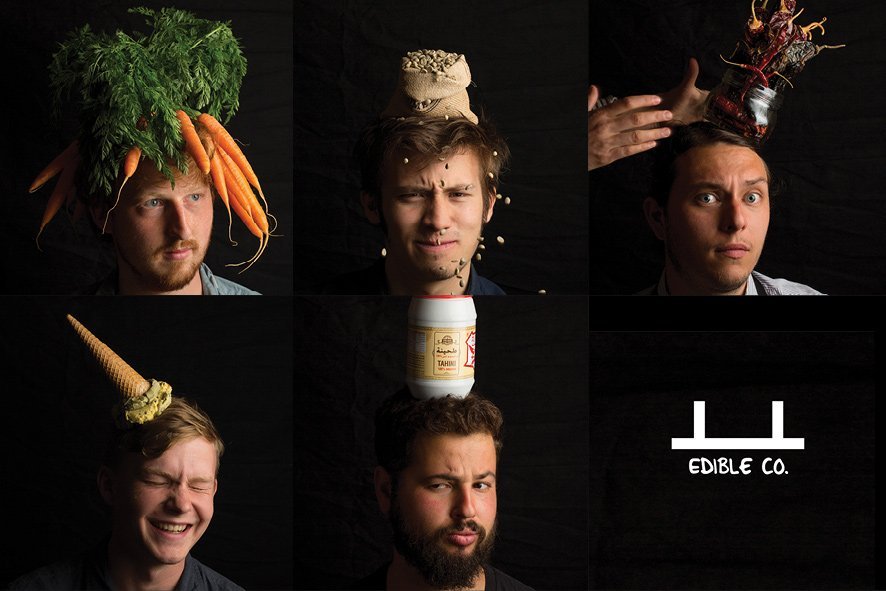
The Edible Commandments community has arrived: they come from Italy, the Netherlands, Switzerland, Norway, Israel, Brazil, Colombia, Guatemala and the United States, all are studying at the University of Gastronomic Sciences and they all share a passion for gastronomy (naturally, given where they are studying!) and cooking.
Food culture, and food in all its forms and expressions, is the focus of their interest. Coming from different countries and continents, and therefore different gastronomic cultures, they draw on their diverse backgrounds and use products from their own kitchen gardens to create food that is nutritious as well as exciting for all the senses.
The group started in 2014 with a pop-up dinner organized by friends called “The Twelve Edible Commandments,” and the friendship evolved into the idea to organize convivial experiences that represented their cultural diversity and at the same time their common goals, inspired by their shared life in Pollenzo.
Animated by this spirit, The Edible Commandments will be the chefs of the week at the Academic Tables, with a menu packed with flavors and cultural evocations.
The group’s members are Milo Buur, 25, and Julia Crijnen, 26, from Amsterdam, the Netherlands; Laura Wuethrich, 24, from Zurich, Switzerland; Sebastian Burgos, 21, from Bogotá, and Andres Jara, 26, from Cartagena, Colombia; Jonas Zackrisson Torp, 25, from Oslo, Norway; Matheus Sborgia, 26, from São Simão, Brazil; Yoni Nimrod, 30, from Tel Aviv, Israel; Riccardo Liopi, 24, from Milan, Italy; Tyler Hanse, 22, from Philadelphia, USA; and Stephan Sundfeld, 26, from Guatemala City, Guatemala.
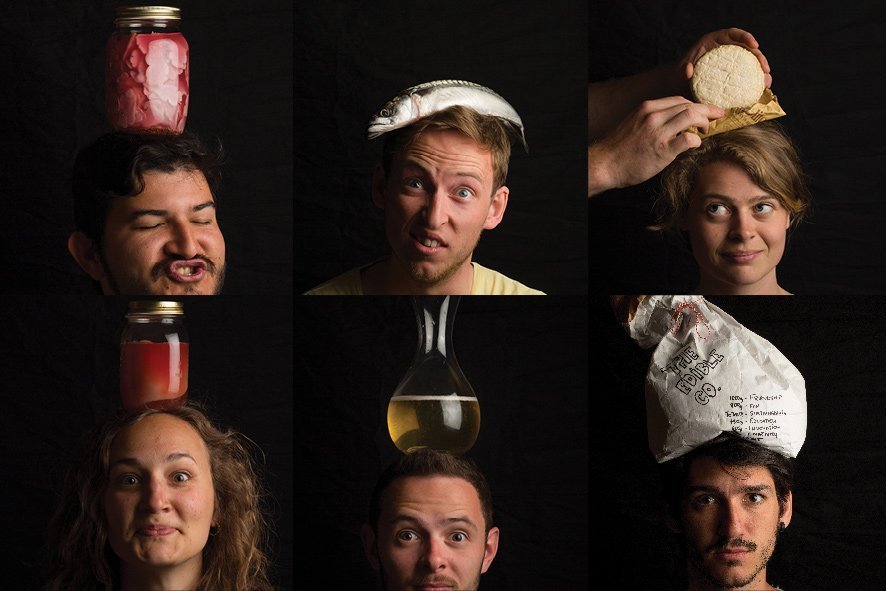
This is their menu:
Tuesday starts in the Middle East, with falafel, the classic street food of chickpea fritters, served with hummus inside pita bread and topped with vegetables and sauces, and an Israeli couscous salad with herbs. The menu then moves north, to Norway, for Karbonader, a veal patty served with potato salad, caramelized onions, pickles and mustard. Also from Northern Europe comes a mussel soup, flavored with onions, carrot, celery and fennel, spices and white wine, and to finish an elderflower mousse.
Wednesday continues with a vegetarian lasagna, followed by bagels served with egg and cheese, then the Dutch Andijvie Stampot, made with potatoes, chicory, minced pork and butter, and a quiche filled with foraged ingredients collected that morning. A lemon tart brings the meal to a close.
On Thursday it’s the turn of a classic Caesar salad, then the Vietnamese sandwich banh mi, with ham, pickled vegetables, pâté, mayonnaise and other sauces and spices. Then comes rice and beans with carnitas, braised beef, one of the symbols of Mexican cuisine and Latin American cooking in general, and arepas, a traditional Colombian corn bread filled with cheese and vegetables. For dessert, an unusual millefoglie whose sweetness will be offset by foraged sour herbs.
Friday brings roti, a dish of Surinam origin modified for Dutch tastes, a stew of vegetables with a boiled egg, pickles and flatbread. This is followed by a soup of chicken broth, dumplings and vegetables, and a “drowned burrito,” a revisitation of the Mexican burrito with green salsa, grated cheese and sour cream, plus a bean salad. Friday’s dessert is a hybrid, polenta and gianduja, a corn pudding served with a chocolate and hazelnut mousse.
Each day’s menu will also include steamed vegetables, a green salad and roasted potatoes.