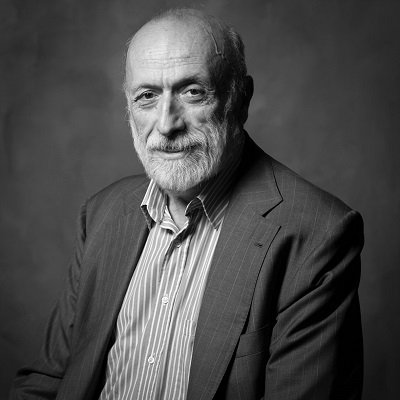
On Saturday, December 13, 2025, Corriere della Sera, Italy’s leading newspaper, dedicated an important interview to Carlo Petrini, founder of Slow Food and president of the University of Pollenzo.
We present it here in its full version.
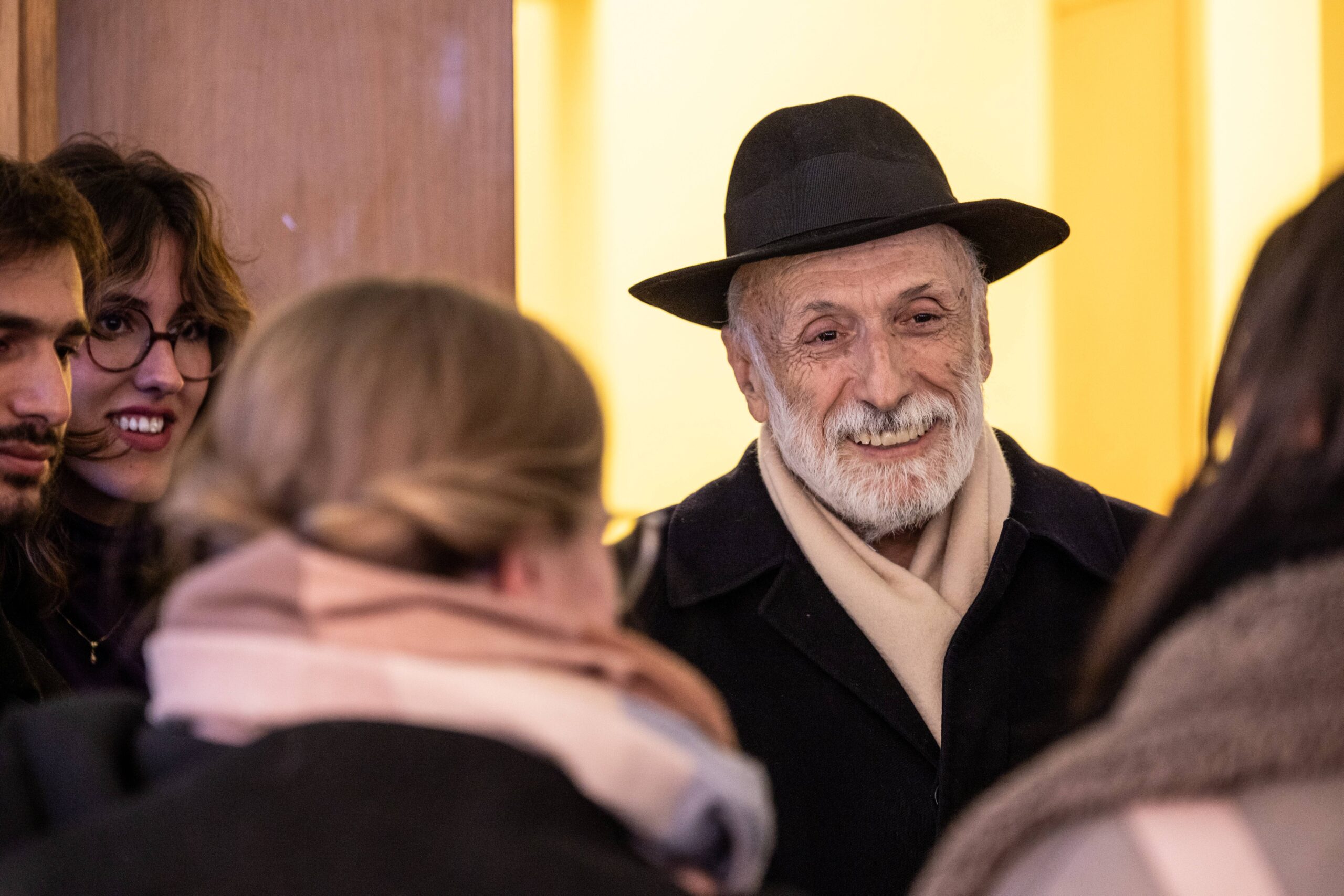
Carlo Petrini: “Slow Food? It wouldn’t exist without McDonald’s”
The Piedmontese gastronome: “I loved Bergoglio, I used to send him agnolotti.
At the University of Pollenzo, a free course for migrants.”
By Elvira Serra
POLLENZO (BRA), Saturday, December 13, 2025.
Why Carlin?
“In Piedmont, using the diminutive is common. I inherited it from my paternal grandfather, who was also named Carlo.”
What did you dream of as a child?
“My parents wanted me to work in a factory. So instead of middle school, I did vocational training and then enrolled in a technical institute for mechanics. But it wasn’t my path: I excelled in humanities and was a disaster in technical subjects.”
And how did your diploma go?
“I still dream about it. I had to take all subjects, as was the custom then, but I had failing grades in mechanics, technology, and industrial design. After the exam, I was left with a 5 in mechanics and had to retake it in September. Long story short: during the oral exam, the head of the board asked me, ‘Petrini, can you guarantee us you’ll never work as a mechanical technician?’ And I replied: I swear!”
But you did: to support your sociology studies in Trento, you worked with your father.
“Yes, I helped in his workshop and took night classes in Turin: I only went to Trento to take exams. Those were the years of student occupations with Boato, Curcio, and Rostagno. I quit with four exams left — there was too much going on: in Bra, we opened the first food shop and founded Radio Bra Onde Rosse, which was seized three times.”
Carlin Petrini, 76, who has worn a bit but with a newfound gentleness, tells the story with bright eyes, tracing the path that led him to the ergonomic chair of president at the University of Gastronomic Sciences in Pollenzo. From Slow Food to Terra Madre, to one of the most original contradictions: he was friends with a pope — despite being a non-believer — and with a king — despite being a staunch republican.
Let’s start with the Pope. How did things go with Bergoglio?
“I had sent him the book Terra Madre to thank him for making his first official visit to Lampedusa in 2013. Then one evening, while I was in Paris, I received a phone call. ‘Hello? This is Pope Francis.’ And I said, ‘This is Carlin Petrini.’”
What did you talk about?
“He told me he had come across Slow Food in Argentina. And he talked about his grandmother, who in Piedmontese would say: ‘When we die, there are no pockets in the shroud.’ I told him about mine, who, when the priest refused to give her absolution because she was voting like her communist husband, replied: ‘Then keep it!’ The story made him laugh; he said, ‘If she were here, I’d hug her.’ In the letter he sent me days later, he wrote that just thinking about it still made him smile.”
He asked you to write the introduction to the encyclical Laudato Si’.
“And he sent me to the Pan-Amazonian Synod, calling me ‘pious’ because I felt pietas for nature. I’ll never forget that experience, with the extraordinary bishops of the Amazon defending the indigenous people against extractive capitalism and forest destruction: they were truly close to the poorest.”
Did you attend his funeral?
“No. I don’t think he would’ve liked that funeral. We used to see each other 3–4 times a year in Santa Marta. At Christmas, I’d send him tajarin, and one year I sent him plin agnolotti: I had over four thousand made, imagining a big family including the Caritas of Rome, Rieti, Alba, Bra, and the Community of Sant’Egidio. He ate them with butter and sage.”
Have you met Pope Leo XIV?
“Not yet. But I appreciated that he referred back to Leo XIII of Rerum Novarum.”
And how did your friendship with King Charles of England begin?
“He came to the first edition of Terra Madre in Turin, 21 years ago, and we’ve been friends ever since: every year I’d visit him at Highgrove House or Clarence House, and he helped Slow Food UK a lot.”
Did you attend his coronation?
“Of course not… After the deaths of his parents, we didn’t see each other for three years. Then he hosted a dinner at Highgrove House in honour of Slow Food, with help from the Italian Ambassador, and invited me for tea early. Seeing him pour the tea from the pot was quite something.”
And Camilla?
“She brought him his pills: he and I are ‘brothers in illness,’ both with prostate cancer. He said, ‘Thank goodness she prepares them for me.’ I replied, ‘My sister takes care of mine!’”
Chiara. Do you regret not starting a family of your own?
“No. The more things grew, the more I felt part of a larger family. I wouldn’t trade the satisfaction I’ve had for anything.”
One last thing about King Charles. You met again in Ravenna on April 10. Mattarella was there too. What did you say to each other?
“The hug we shared said it all. Mattarella looked at us, surprised, and the security went crazy: all off protocol.”
You’ve met so many people. Who moved you the most?
“Luis Sepúlveda y Pepe Mujica. We had a great conversation about happiness in Milan, with two thousand people listening. Mujica and I reunited in Brazil with Lula during the 2022 elections. We took a photo and sent it to Bishop Pompili, who was with the Pope: he replied with a photo of Bergoglio looking at our picture.”
Pope Francis once said that pleasure is a gift from God, for the two functions that ensure the species’ survival: sex and food. Where do you find pleasure today?
“As I age, and with this illness, I have many restrictions, but I find pleasure in small things. I can’t drink, but I don’t miss it: I have wine served just to smell it. I barely give up food, but in small portions.”
Your Madeleine?
“Lately, it’s the tomato sauce they make here at the university, and rice pudding, a dish my mother and grandmother used to make: I miss it.”
In 2007, you were one of the 45 founding members of the Democratic Party. Are you disappointed?
“I’m not actively involved and have no reason to be disappointed. I appreciate what Elly Schlein is doing; getting everyone to agree is tough. But I remain perplexed by this left that never misses a chance to divide itself, while the others unite when needed.”
You’ve always gotten along with Alemanno* and Ghigo*.
“Ghigo is still on the university’s board, along with my friend Luciana Castellina. Alemanno wrote to me from prison asking for contacts for prison gardening programs: now he’s doing it too.”
Today, we have a Ministry of Food Sovereignty. Did you ever expect that?
“When I heard about it, I was a bit stunned. Food sovereignty means letting local farmers decide what to grow.”
Do you align with Salvini* when he opposes insect flour and lab-grown meat?
“I don’t align with anyone; I say what I think. Many communities eat insects: in Mexico, for example, they eat crickets. And because of the right to food sovereignty, I can’t tell them what to eat. As for lab-grown meat, before supporting it, I want to see how it’s produced. But it’d be enough to eat less and eat better: when I was young, people ate 35 kg of meat per capita per year; now it’s 95. This causes many diseases.”
Have you ever been to McDonald’s?
“I don’t remember ever going. But once on a plane, a man approached me and said, ‘I’m your enemy. I manage all the McDonald’s in Italy.’ I replied that I was actually grateful — without them, there’d be no Slow Food. He said he took his friends to the osterias in the Slow Food Osterie d’Italia guide.”
Are you happy about UNESCO’s recognition of Italian cuisine?
“It’s a big milestone, especially if seen as true recognition of all the producers who’ve highlighted the richness of our country through their work, both natural and gastronomic biodiversity. In 40 years with Slow Food, we’ve catalogued 1,239 endangered products in the Ark of Taste. UNESCO’s recognition is an incentive to continue this work.”
Is it true you don’t like male chefs?
“No. I just say that in the media, men get much more visibility than women. Yet gastronomy was built by millions of women making meals from whatever was at home.”
How did your school food education petition go?
“It stalled a bit; we reached half a million signatures. But I’m happy about the Sicilian Regional bill pushed by Ersilia Saverino of the Democratic Party.”
Which recognition means the most to you? From “Time” naming you a hero of our time, to the “Wooden Slingshot prize” for your anti-GMO battles.
“All of them. The honorary degrees — my mother would’ve been proud. But I was truly moved to win Communicator of the Year in London.”
But do you speak English?
“That’s the beauty of it: communication isn’t just about language. Anyway, I won’t forget that trip: Agnelli lent me his private jet, as Malpensa was closed due to bad weather.”
What about emissions?
“True, but two thousand people were waiting for me, and I didn’t want to let them down.”
Of everything you’ve done, what are you most proud of?
“The university here in Pollenzo. We renovated this building with practically no money. The estimate was 12 billion old lire, and it ballooned to 26 million euros. But all the Langhe communities supported this madness. People from Harvard came to study the model.”
How many students have passed through Pollenzo?
“Almost five thousand, from 110 countries. A Japanese woman just enrolled — her parents met here! Next spring, we’ll launch a course for migrants to work in restaurants: nobody wants that job.”
Excuse me, but how can a migrant afford it?
“It will be free!”
Do you ever think about what you’ll be like when you’re gone?
“Yes, but I hope I’ve laid the foundation for the work to continue.”
*Gianni Alemanno is a right wing Italian politician, former Minister and mayor of Rome.
*Enzo Ghigo is is an Italian politician, former President of Piedmont from 1995 to 2005.
*Matteo Salvini is an Italian politician of the Lega party, now serving as Deputy Prime Minister of Italy and Minister of Infrastructure and Transport.
Here is the original interview published in Corriere della Sera.