
As I write, a bee enters the window. I don’t notice it for what it is at first. Instead, I think of a fly. The insistent hum makes me suspicious. I get out of bed to escape to the other room. From the corridor, I listen in silence. When will she – this flower-loving creature – allow me to go back to staring at the computer screen?
I put a door between me and nature. I got scared. It’s almost as if the bee wants to tell me that I’m not ready to talk about honey and, instead, invites me to leave the stage to those who, like her, have dedicated their lives to its sweetness.
Lessons on Bees, Honey and Life with Andrea Paternoster and Peter, the Bulgarian Beekeeper.
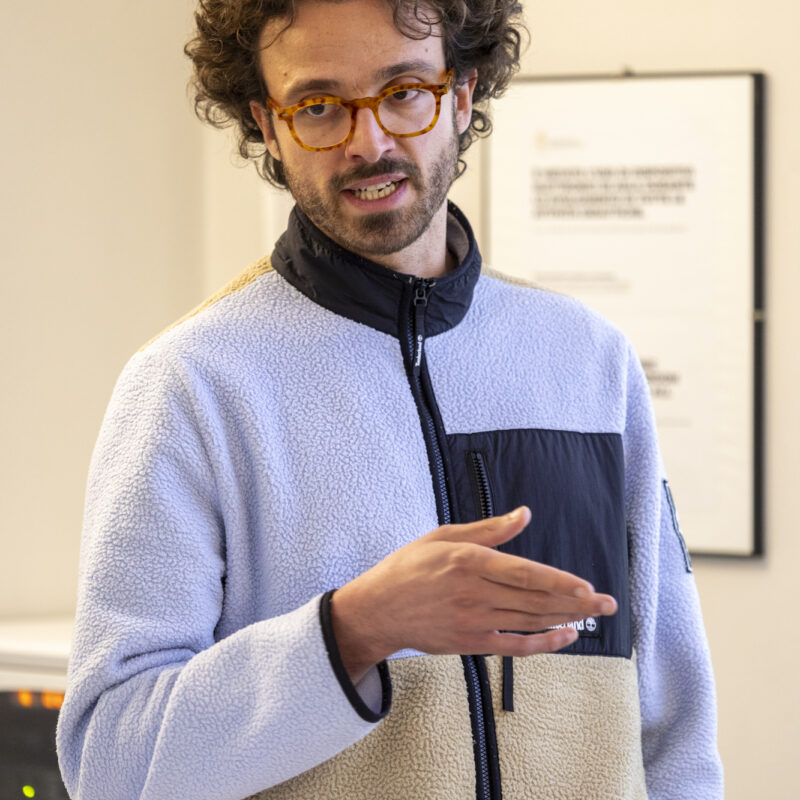
My name is Andrea; I am a beekeeper. I live in Trentino. It is a great pleasure for me to introduce you to my friend Peter, a Bulgarian beekeeper. Our goal is to change your life.
Pause. He looks at us. He laughs a little bit. He smiles with his eyes.
Beekeeping is not my profession; it is my life. My father and grandfather were both beekeepers, and they passed this ‘disease’ on to me as my inheritance. It is difficult to escape this fate. Beekeeping and life with bees are very engaging. It is like being inside nature itself.
One day, it was 1984, I went to visit my father’s apiary. I was incredibly afraid of bees. My father’s was a very artisanal beekeeping, conducted in a small dark room, without much cleaning. I didn’t have much respect for this type of business. That spring day, I approached the bees – I don’t even know for what reason – and I saw them fly, returning to their hives. This flight, which is a beautiful dance, made me fall in love.
It was difficult for me to make beekeeping a profession, as I live in Val di Non, famous for the cultivation of apples. As an only child and owner of a farm, I was destined for that job. However, being a female one, the world of bees held a great capacity for convincing me.
A new life had begun for me, linked to bees and honey. To bees, because I started studying how they lived and worked and to honey because I realised that it was a somewhat forgotten product. To revive the idea of honey, to carry out a real honey renaissance was my goal.
Since then, I have spent my life telling the story of honey differently: it is a noble ingredient that must be used at different times of the day and in all kinds of preparations, sweet and savoury, in traditional and innovative cuisine. This idea of honey as an ingredient is fundamental. Honey is often relegated to a sweetener for breakfast or, even worse, used on cold November days to treat a sore throat. However, honey is not a food for disease but for joy. We can use it in many different ways.
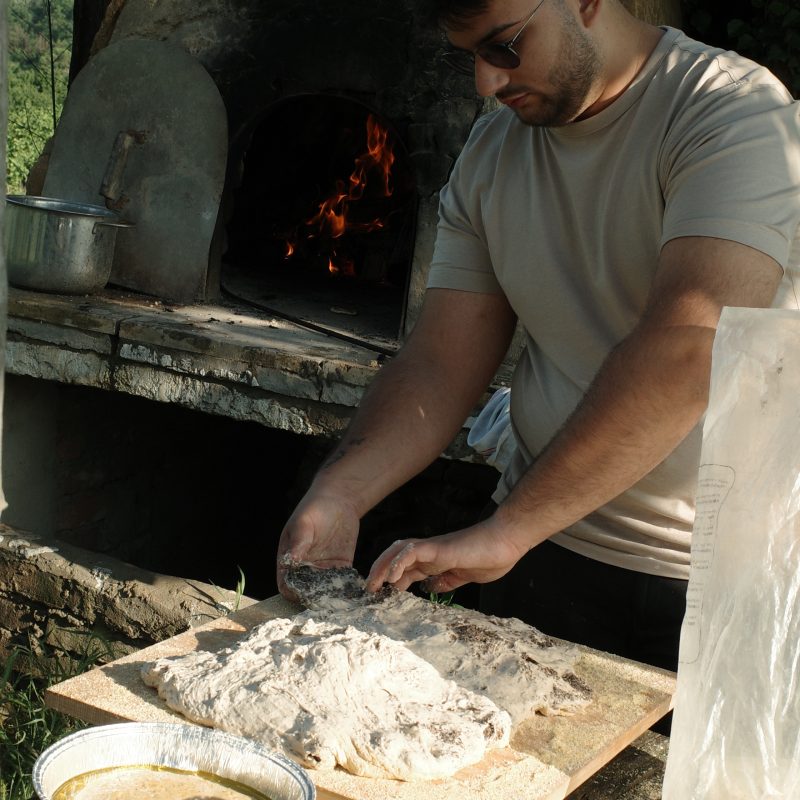
On the table in front of him, a raw Fassona fillet is waiting to be the protagonist of the first magic trick, performed by honey. He puts it in a bag with some sunflower honey, thick and creamy. He massages the meat to let the air out before closing the bag and leaving it in the refrigerator for four hours. We will taste the result in the afternoon.
It is an idea that needs time. The honey will put on the salt dress and cook the meat by extracting the free water present. It is a kind of maceration.
Beehives are a very sophisticated organism. Some great entomologists have described bees not as the set of many organisms in a society but as one single superorganism. Each bee has a different job; some form the hand, some the eye, some the foot. The heart of this organism is the queen.
When the bee visits the flower, she sucks the nectar and collects it in its honey bag. The nectar has not yet been deferred; it is still nectar. Once in the hive, the worker bee fills the cells already emptied and cleaned. This work is done throughout the flowering day.
“Kiss of life”.
At night or when the weather is bad, bees work the nectar and turn it into honey. The process consists of the nectar exchange between bees, who take it from the cell and exchange it among themselves, dehumidifying it and enriching it with enzymes. The nectar is brought to a humidity of less than 20%. Finally, each cell will be filled with honey and then covered in wax.
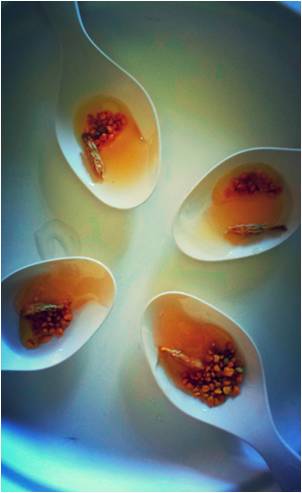
I want to open a window in your eyes to allow you to see nature differently. I want to prepare something strange, without logic: a jazz dish. We put everything we have with us onto a spoon without a criterion.
Honey from the tree of paradise, chestnut pollen, propolis, dehydrated primrose petals, Sicilian extra virgin olive oil, honey brandy and the magical ingredient: honey vinegar. It is a stroke of life; they are all extremely vital foods.
The bee family is divided into three castes: the queen bee, the worker bees and the drones. The difference between the queen and worker bee is that the former has a reproduction system that the latter does not have. As the name suggests, the worker carries out all the work in the hive, while the queen bee takes care of the reproduction of the family. It is she who directs the family through chemical messages and pheromones. The drone is the male; his only task is that of reproduction. The drone’s eyes are much larger than those of the others. The brain is perhaps much smaller; it has only one thought in its head, but this happens in many species.
“Love is in the air”.
The only thought is to look for the female when the queen needs to be fertilised. Fertilisation occurs during flight. Usually, it is the drones that arrive first to fertilise the queen. It’s a real race. During the fertilisation, the queen collects the male seme and uses it while sipping it during their life.
The filmography of honey is full of erotic meanings. The very first is found in the Bible: “Your lips dip virgin honey, o bride, there is honey and milk under your tongue, and the perfume of your garments is like the perfume of Lebanon”[1].
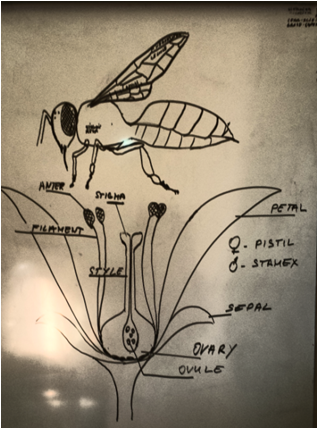
What gives quality to the honey? Honey has to be as similar as possible to the nectar that originated it. For remember: bees don’t make honey; flowers make honey. Bees do not have a honey-producing udder. They have one for wax but not for making honey. In my opinion, there is such a great similarity between honey and the nectar of flowers that when you meet your girlfriend, you could just as well give her a jar of honey, instead of a bouquet of flowers.
 |
“Mastica e sputa Da una parte il miele Mastica e sputa Dall’altra la cera Mastica e sputa Prima che venga neve Luce luce lontana Più bassa delle stelle Sarà la stessa mano Che ti accende e ti spegne Ho visto Nina volare Tra le corde dell’altalena Un giorno la prenderò Come fa il vento alla schiena E se lo sa mio padre Dovrò cambiar paese Se mio padre lo sa Mi imbarcherò sul mare”[2]. |
 |
Why does honey crystallise? Honey is a hyper-saturated sugar solution: bees manage to dissolve four jars full of sugar in a jar of water, which would be an impossible task for us. The magic is in the kiss of life, with which the bees create a solution that has 50% water at 18%. The crystallisation rate depends on the sugars present. The chemistry of the product never changes; the sugars in honey simply precipitate and become crystalline. To avoid crystallisation, the industry pasteurises honey to make it correspond to the pornographic image of honey that is always liquid, always the same colour and always the same flavour; honey to be taken with that uncomfortable ring instrument.
An important value for honey is that of diversity.
We taste Sulla, Tiglio (Linden), Eucalipto (Eucalyptus), Tarassaco (Dandelion), Erica (Heather) and Melata di Abete (Fir Honeydew) kinds of honey.
After such an intense day, I want to leave you with a scratch and not a caress: as our last tasting, we will try the Corbezzolo honey, which is only made in Sardinia. It’s the bitterest honey produced in the world—an oxymoron among honey. In the nose, it is cut grass. It is a coffee honey: bitter, alcoholic, tastes of rhubarb, chicory and gentian. A meditation honey: if you taste it ten times at ten different moments, you will find ten different nuances.
80% of honey production comes from families of small beekeepers. There are industrial production cases, companies with many hives, but it isn’t easy to industrialise the process. Production is one thing; the packaging is another. Beekeepers generally sell honey to packers. Then, there is also the work of honey assemblers. I have a friend who brings five honey trucks to Nestlé or Barilla for cookies every week. In these cases, honey is sold based on two elements: colour and price.
Three hundred tons of honey are consumed in Europe. European production is responsible for about half of this quantity; the rest comes from all over the world. 99% of the honey that comes from the rest of the world is not selected for its quality but for its price. While excellent honey is made worldwide, the idea of industrial honey is to make it a commodity, like sugar and coffee, transformed into a product with only one flavour, one colour, one texture. To offer the consumer only one choice: sugar or honey. White sugar is blasphemy to honey’s prayer. The choice is yours.
All the finer things in life come from suffering. Be wary of things that are too easy. When you see honey on a shelf labelled ‘honey’ but always looks the same, ask yourself: where is the catch? Honey does not exist in just one way, one colour. There are many kinds of honey with many different colours. Become ambassadors of this message.
At the end of each tasting, I always leave an empty glass representing next year’s honey. Because, for me, honey is discovery.
[1] Cantico dei Cantici, 4:11
[2] Fabrizio De Andrè, Ho visto Nina volare